Content repurposing
How Athlete Spotlight Turns Clips Into Sponsor-Ready Articles
Most athletes already have content. The problem is that the content is trapped inside social feeds, camera rolls, or group chats. A clip may get views for 48 hours, then disappear from the search record.
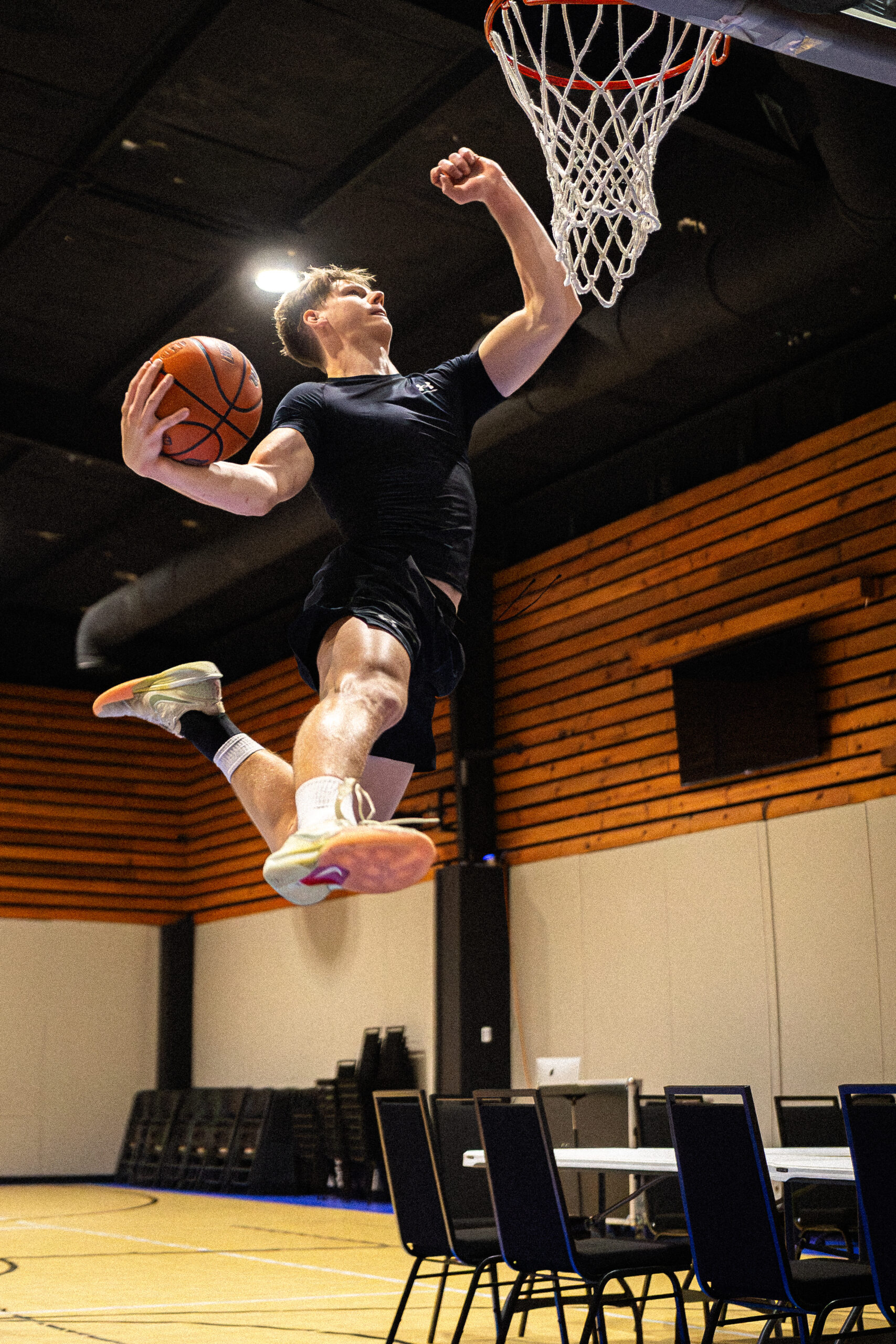
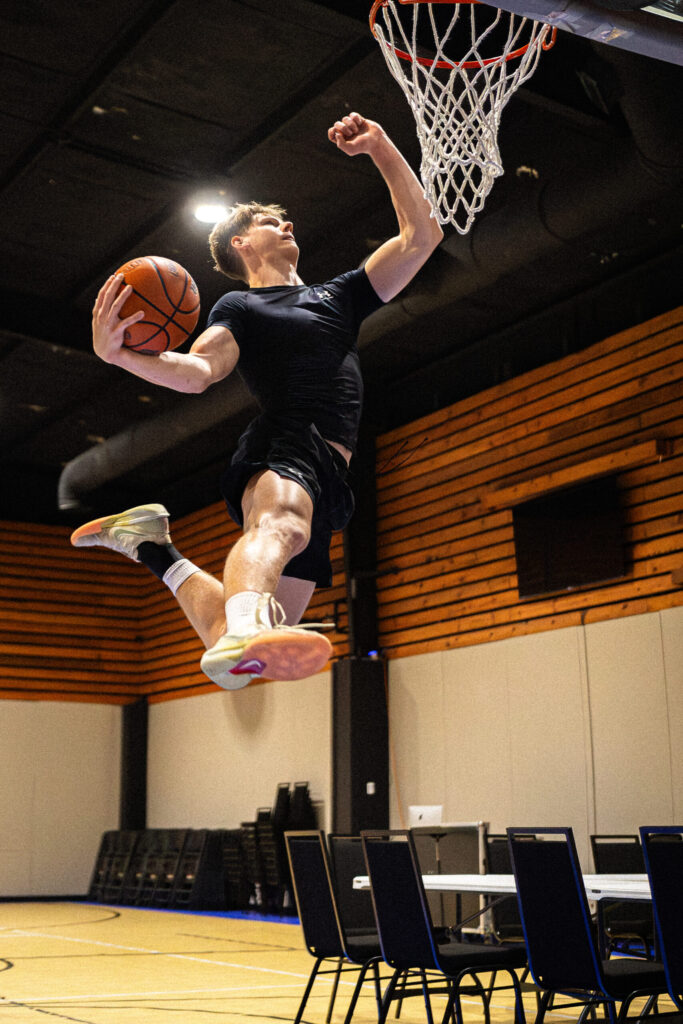
Athlete Spotlight changes the job of each clip. A dunk session, training set, tournament run, NIL activation, podcast clip, or coach shout-out becomes part of a searchable story on the athlete’s own site.
The workflow
- Collect: handles, videos, photos, stats, awards, mentions, and the story behind each proof point.
- Organize: sort the proof into topic-wheel categories such as performance, sponsorship, training, and media.
- Publish: write articles that explain why the clip matters, embed the source, and link to related pages.
- Structure: add schema and entity links so Google and AI systems understand the athlete.
Why sponsors care
Sponsors do not only buy reach. They buy trust, fit, consistency, and proof that the athlete can tell a story. Articles make that proof easier to evaluate.
What a clip is worth after 48 hours
Close to nothing, in search terms. A dunk that pulls 400,000 views on a Tuesday is essentially invisible by Friday, because the platforms that carried it are not built to be searched and are not indexed in any useful way. The view count was real. The record of it is not.
This is the gap that costs young athletes money. They are producing genuine proof every week — sessions, competitions, podcast appearances, coach shout-outs — and almost none of it survives in a form anyone can find later. The athlete feels productive and stays invisible at the same time.
The workflow, on a real athlete
Finn Addy is a useful example because his proof was strong and his footprint was not. He won Dunk Camp’s 10-foot competition, competed at FIBA 3×3 in Edmonton, and trains with Jordan Kilganon. He had roughly 27,000 Instagram followers and more than a hundred YouTube videos. Search his name and almost none of that surfaced. His domain sat empty.
Here is what each stage of the workflow actually did with that raw material.
- Collect. Handles, competition results, the Dunk Camp title, the FIBA appearance, who he trains with, and the story behind each one. Not a scrape — the context that makes a result legible.
- Organize. Sort the proof into topic categories: performance, training, competition, media. Each category becomes a section that can hold new material for years without being redesigned.
- Publish. Write the article that explains why a one-foot 10-foot dunk is hard, embed the clip, and link it to the competition it came from. The clip is the evidence; the article is the argument.
- Structure. Add schema and sameAs links so Google and AI assistants connect the site, the YouTube channel, the Instagram account and the federation record as one person rather than four unrelated things.
What makes an article sponsor-ready
“Sponsor-ready” is not a tone. It is a set of questions answered on one page, in a form a marketing manager can forward to their boss without doing homework first.
- What happened, specifically. Named event, date, result. “Dunk Camp 2024, 10-foot champion” beats “crazy hops.”
- Why it is hard. A sponsor outside your sport cannot grade the difficulty. Tell them, without inflating it.
- The evidence, embedded. The clip sits inside the page, so the claim and the proof travel together.
- Where it fits. Links to the competition, the training that led to it, and the athlete’s other results, so one page opens into a body of work.
- A way to reach the athlete. Astonishing how often this is missing.
Why it compounds
A feed resets to zero every day. Articles do the opposite: each one adds a page that can rank, be cited, and be found by an AI assistant answering a question about your sport. Nathaniel Kenney has passed a billion views and worked with Gatorade, Google and ESPN. Carson Teagarden has more than 724,000 YouTube subscribers. Reach was never their problem. The problem was that almost none of that reach left a record a sponsor could evaluate six months later.
One clip is a moment. Fifty articles built from fifty clips is a case for why someone should pay you. The clips you already have are enough to start.