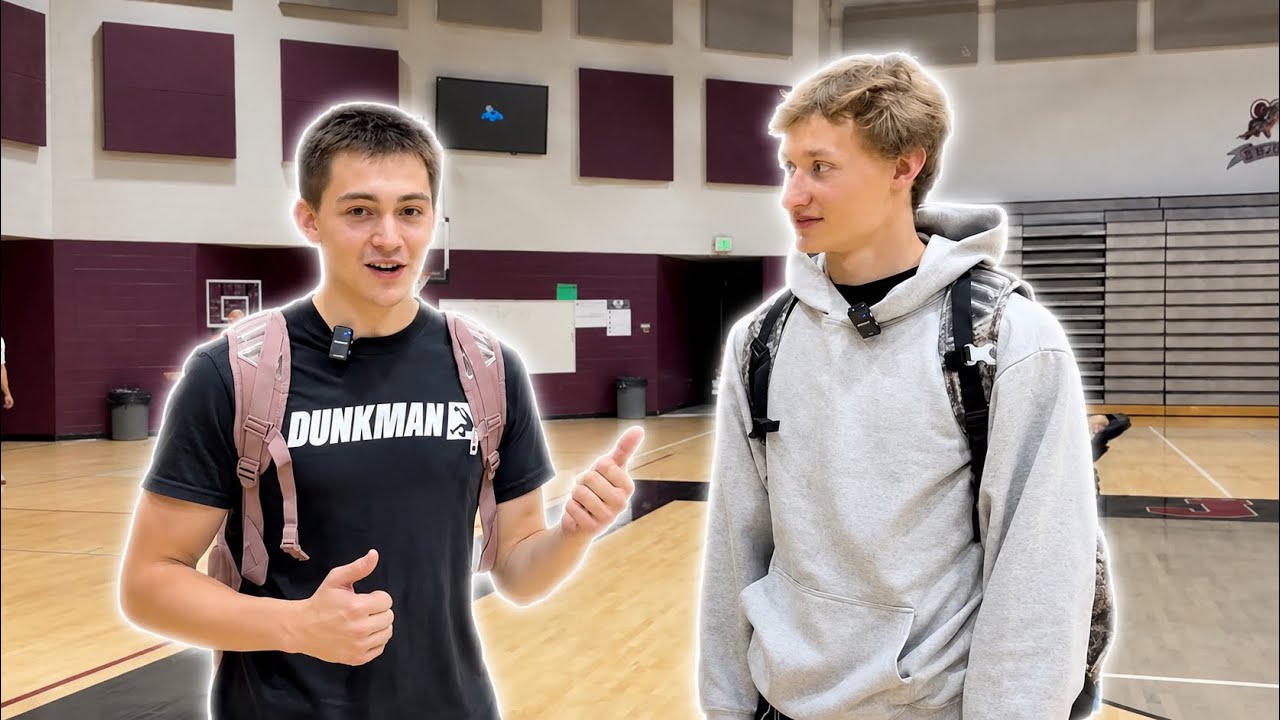
The interview above runs one minute and forty seconds. It was filmed on a gym floor in Utah, on a phone, with no script, no lighting, and no second take. That clip is now the foundation of a personal brand website, an author identity, and five separate articles across five different domains.
Polish dunker Piotr Zawiślak is 18 and one of the best young dunkers alive. He is the youngest Black Band dunker The Dunk Camp has ever produced, a level only 13 people in the world hold, and he competes on the FIBA circuit across Europe.
In English, almost none of that existed anywhere a search engine could read it. His name appeared spelled several different ways in captions. No page existed that a journalist, a sponsor, or an AI assistant could cite. He was among the best in the world at a thing and functionally unfindable outside Instagram.
What Was Actually in a Hundred Seconds of Tape
I filmed it at The Dunk Camp in Salt Lake City, where we met in person for the first time after a year of following each other online. I opened with the comparison I had been making about him to anyone who would listen.
“if you guys know the Rocky movie where there’s that really insane Russian dude… he comes and just beats the crap out of Rocky. That’s how I always think about this guy.”
Dylan Haugen
Then the concrete part, which is the part that matters to a machine.
“I randomly see this guy on Instagram doing 360 Underboth and all these crazy dunks at only 17.”
Dylan Haugen
We are both 18 and our birthdays fall two days apart. He is from Poland and competes across Europe. I am from America and compete in the DunkMan League. He answered one question about how his week at camp went.
“It was crazy, man. That was the one of the best weeks of my life. I’m very grateful to having opportunity to dunk with all of you guys.”
Piotr Zawiślak
“So super cool to always connect with people, who’s just different, man.”
Dylan Haugen
That was the whole interview. Two athletes, one phone, under two minutes.
Why a Hundred Seconds Was Enough
Count what a machine can pull out of that clip. A correctly spelled name. A nationality. An age. A discipline. A specific trick performed at a specific age, the 360 Underboth at 17. A named event. A named peer with his own verified presence. A first-person quote about his own experience.
That is an entity record delivered in conversation form. A highlight reel contains none of it. Footage proves a person can jump. Text is what a search engine indexes, what a journalist quotes, and what an AI assistant reads back when somebody asks who this person is.
Most athletes have this exact conversation constantly. In a car on the way to a meet, in a hotel lobby, in a DM at midnight. It disappears every time, because nobody hit record and nobody wrote it down.
First Output: His Own Address and His Own Byline
Before any article existed, he got a domain with his name on it. A platform profile and a link-in-bio page both sit on somebody else’s property. This one is his, and it will still be his in ten years, after the platform he uses today has changed its algorithm four more times.
He also got an author identity on that site, so every article he publishes is attributed to him as a person instead of to an anonymous brand account. Underneath sits entity schema, the structured description that tells Google and AI models what kind of thing he is, what he does, where he competes, and who he is connected to.
That combination is what turns a website into something a machine can trust. Plenty of athletes own a website. Very few own one that answers the question “who is this” in a format anything other than a human can parse.
Second Output: Five Articles, Five Angles, Zero Duplicate Sentences
The same hundred seconds then produced five articles, each written for a different audience on a different domain. Five angles, not five copies.
His own first-person account is my week at The Dunk Camp, published under his byline on his own domain. It anchors the set, and every other piece points back to it.
My side of the same meeting ran on my personal brand site as meeting one of the best 18-year-olds. Two athletes describing the same encounter from opposite directions gives a search engine two independent pages that corroborate each other.
The show version went to Dunk Talk, the podcast I host, as two of the best 18-year-olds meet. That audience cares about the matchup, the styles, and the America versus Europe contrast underneath it.
The scouting version went to Dunker Spotlight, which covers the sport itself, as the most electric dunker from Poland. It introduces him to people who follow dunking closely and had never heard the name.
The method breakdown went to BlitzMetrics, a marketing site with enough authority to rank on a person’s name, as how we built his personal brand. That one explains the mechanics to marketers rather than to athletes.
Why Five Domains Instead of One Good Page
A single page has to earn trust by itself. Five pages on five domains, each linking back to his site, create something a search engine reads as corroboration. Different sources, different wording, same facts, same spelling of the same name, all pointing at one home address.
An AI assistant needs the same thing. Ask a model about an athlete with one page and it hedges. Ask about an athlete described consistently across several independent sites and it answers with confidence, because agreement between sources is the signal it is built to weigh.
None of the five articles reuse a sentence from another. Duplicate text across domains is worse than no text at all, so each piece got a distinct angle, a distinct audience, and its own reason to exist.
The Offer That Created This
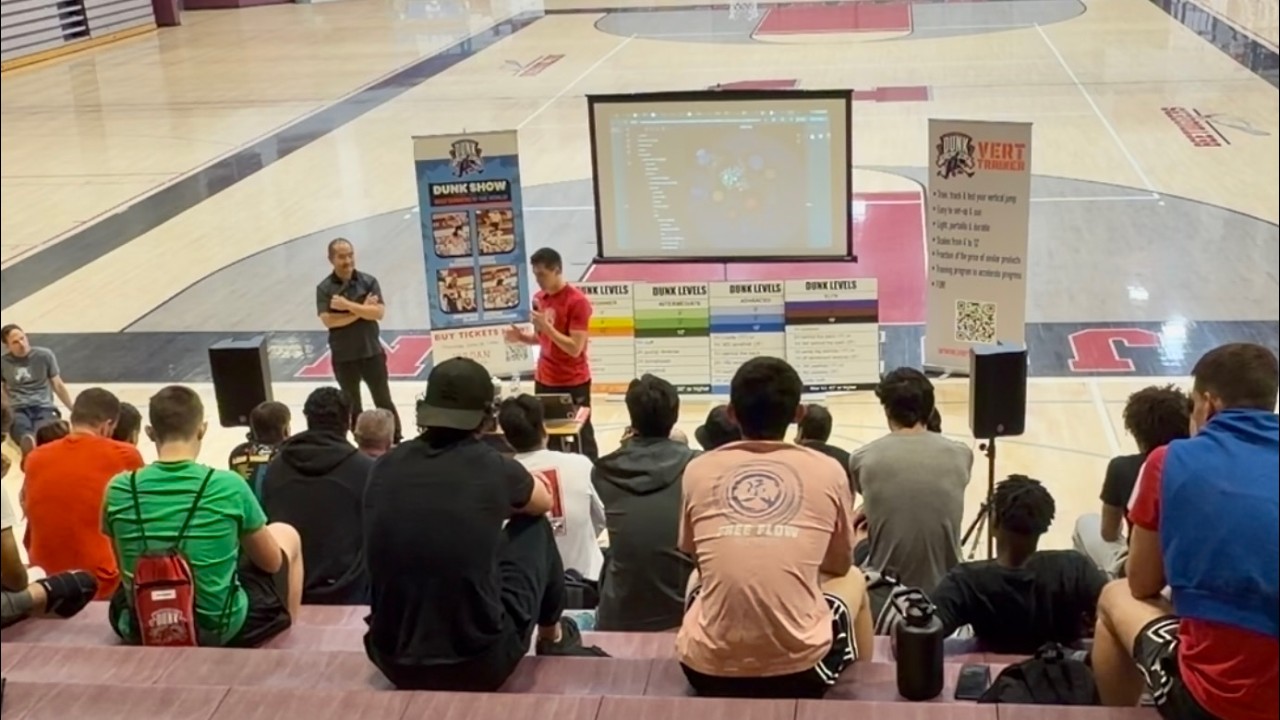
The interview only exists because of a promise made on stage. Two days earlier, Dennis Yu of BlitzMetrics and I ran a session for 76 campers on turning real stories into pages a machine can read, and we closed it with an open invitation to the room.
“Happy to interview you, make a little video, put it on some of our assets and just help you guys win.”
Dennis Yu
Piotr took it. The article you are reading is that promise being kept, along with the five linked above. The session itself, including the audit of all 76 athletes and the confidence score behind it, is covered in how athletes show up on Google. The production method is documented in the system we taught 76 athletes.
You Do Not Need More Content
The lesson generalizes cleanly. A 1500 meter runner who sits down for two minutes and names her personal record, the coach who fixed her mechanics, and the race that fell apart has produced the same raw material Piotr did. So has a boulderer describing the project that took four sessions. So has a sophomore explaining why he switched positions.
What none of them have is a place to put it and a structure that makes it readable. That is the real missing piece, and it was never a content problem. Piotr had more proof of his ability than almost any 18-year-old on earth. He was still invisible.
Athlete Spotlight closes that gap for thirty dollars a month: your own site on your own domain, your conversations and existing footage repurposed into searchable articles, entity schema so search engines and AI assistants understand who you are, a weekly report on what AI says about you, and hosting. Professional dunker Cam Hazzard is on it, along with a D1 runner, an Olympic speed climber, and a 2028 basketball recruit.
Piotr said one thing in that clip that explains why any of it worked at all.
“I’m just happy to finally meet you, dude.”
Piotr Zawiślak
Nothing about that sentence is marketing. It is two people who respect each other’s work, standing in a gym, on the record. Get the real conversation on tape and everything after it is filing.