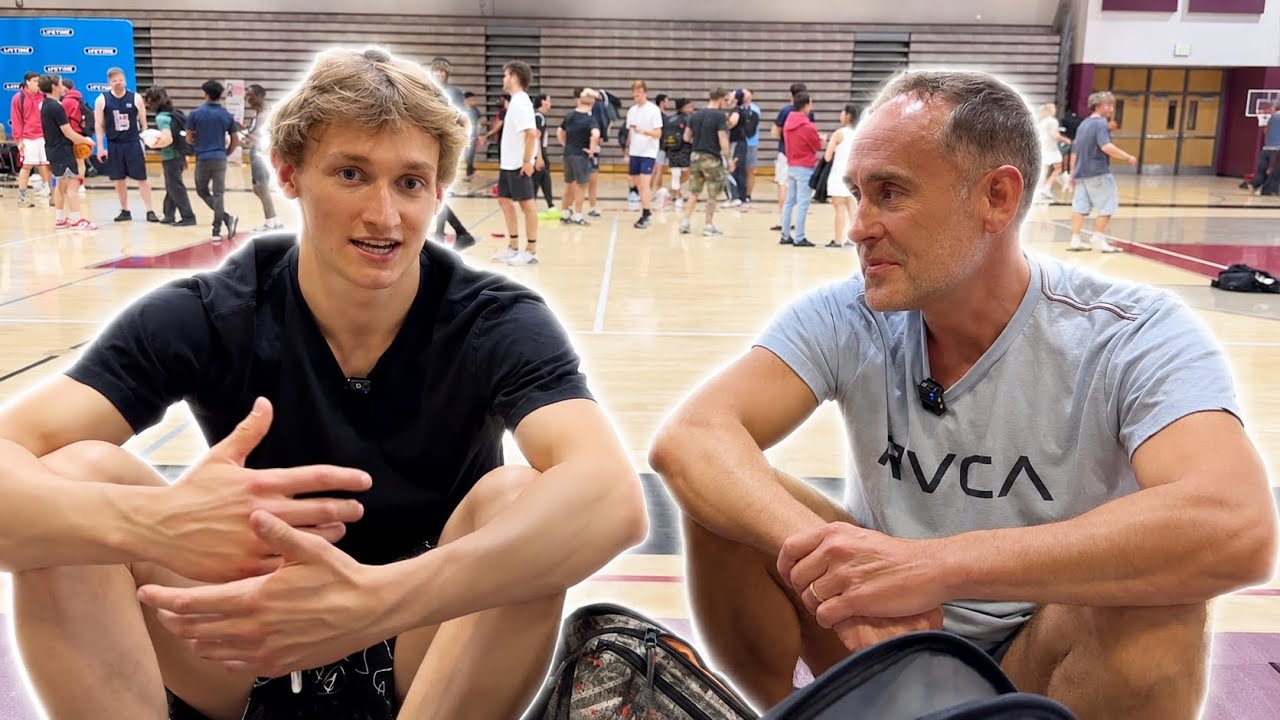
Most athletes spend a lifetime aiming at something and arrive late or not at all. Piotr Zawiślak, a Polish dunker, named his target two years ago while dunking on outdoor rims in Poland, and at 18 he is standing inside it. He has a third place finish at a FIBA contest in Croatia and another FIBA event in France one week after the interview above was filmed.
Joe Kenney, who is Hoopin Nate’s dad, asked him about that timeline at The Dunk Camp in Utah. Joe has watched enough young athletes to know how unusual it is for the plan and the calendar to agree with each other.
“People go a lifetime without achieving their dreams… Two years ago, you dreamt of FIBA… You’re living your dream already.”
Joe Kenney
The Two Year Timeline
Laid out in order, the climb is short enough to fit in a paragraph. Two years ago: outdoor rims, no gym, no coach, no crowd, watching FIBA contests on a phone. Since then: elite indoor training, contests across Europe, a Black Band at The Dunk Camp that only 13 people in the world hold, a FIBA podium in Croatia, and a booked event in France.
“Two years ago, I was just a kid who was doing all his dunks outdoor. I used to dream about doing FIBA, and everything.”
Piotr Zawiślak
Read as a résumé it looks fast. Lived, it was 24 months of unglamorous repetition on public courts in bad weather. Joe put the honest frame on that part at the end of the interview, and it applies to every sport, not only this one.
“The average person has never put in the amount of time and effort and frustration that it takes to get to the level of Piotr.”
Joe Kenney
The Window Is Shorter Than Athletes Think
Joe raised the uncomfortable subject on camera. There was a 38 year old jumper competing that night who was still incredible, and much of the generation that built the sport is closer to the end of its competitive life than the start. He asked Piotr who takes the reins when they step back.
Every athletic discipline has that same clock. The window where your body does the thing it will be remembered for is measured in a handful of years, and it usually closes quietly rather than with a farewell tour. What happens to the record of those years is the question almost nobody asks while they are inside them.
Most athletes leave that window undocumented. There are clips, because clips are easy and social platforms reward them. There is no account of the training, the setbacks, the specific numbers, or the reason any of it was attempted. The proof of work disappears and only the trophy photo survives.
Recruiters and Sponsors Read Backwards
Here is the practical reason this matters. Nobody discovers an athlete at the beginning. Recruiters, program directors, agents, brand managers, and event organizers all arrive after somebody good has already gotten good. The moment they hear a name, they go looking, and they read the history backwards from that moment.
What they find determines what they offer. If the search returns one viral clip and a handle, the athlete reads as a lucky moment. If it returns a documented trajectory with dates, results, coaches, goals, and setbacks, the athlete reads as a trend line, and a trend line is what a sponsor is actually buying. Same person, two completely different valuations.
The catch is that the archive cannot be built retroactively with any credibility. An account written five years later about what training felt like is a memory. An interview filmed the week of the event, with the vertical number and the missing dunks named out loud, is evidence. Only one of those two can be created on demand, and it is not the second one.
What a Documented Climb Looks Like
Piotr’s interview is a working example, and the useful part is how specific it gets. He says he wants to be the best dunker alive, then immediately gives the number standing in the way.
“I think I need to improve my bounce more just to get around maybe 50 inches.”
Piotr Zawiślak
He is at 44 or 45 inches today. He names the gap in his skill set without being pushed: strong off the dribble, missing dunks off the lob and off the backboard. He names his one unfinished trick, the 720, and confirms he has landed 540 several times already. Three specific, verifiable claims, on the record, with a date attached.
Two years from now, every one of those lines becomes checkable. Did the vertical move? Did the lob dunks arrive? Did the 720 go down? That is what a documented climb buys an athlete: a public before picture that makes the after picture mean something. Without it, improvement is invisible even when it happens.
The Second Track Belongs in the Record Too
Piotr’s answer about role models is worth attention from any athlete reading this. He named Isaiah Rivera for the mechanical reasons, same approach, right handed, same style built further along. Then he named Lipek, the Polish dunker, who is a doctor now.
“I’m probably gonna go to college and maybe do PT school.”
Piotr Zawiślak
Seeing somebody from his own country finish a degree without abandoning the sport changed what Piotr thinks is possible for himself. Physical therapy is a real plan with a real reason behind it, made by an athlete whose body already taught him most of the first year of the curriculum.
That belongs in his public record. An athlete with a documented second track is a safer partner for a sponsor and a more interesting story for a program, because it signals someone who is planning past the window rather than pretending it will not close.
Start the Archive Now
The interview above exists because Dylan Haugen of Dunk Talk and Dennis Yu of BlitzMetrics ran a session for 76 campers on turning real stories into things that live at a permanent address, then offered to film anyone who wanted it. That session is written up in the system taught at that camp, and the broader argument sits in documenting the climb while it happens.
Piotr’s list of who carries the sport next was Dylan Haugen, himself, Nathaniel “Hoopin Nate” Kenney, and Dillan McCarthy, with Joe adding the dunker Cam Hazzard. Every one of them is inside the window right now. His own account is at outdoor rims to the FIBA circuit, the technical version is in the Dunk Talk FIBA conversation, and the visibility side is in what those two years actually took.
If you are an athlete in the middle of your own two year climb, the useful move is to say the specifics out loud somewhere permanent while they are still true. Your vertical today. What you cannot do yet. Who you learned it from. The people who decide your next opportunity will read it backwards, and they can only read what exists.