Tag: Dunk Camp 2026

  • Complementary Strengths Make Better Content

    Complementary Strengths Make Better Content

    Almost every athlete films with the person in the next lane. Same event, same training group, same schedule, same strengths. It is convenient, and it produces two minutes of two people telling each other they looked good today.

    The video above is what happens when you do the opposite. Two athletes with opposite strengths and one camera, and inside two minutes one of them hands over his entire training routine because the other one actually needed it.

    The Case

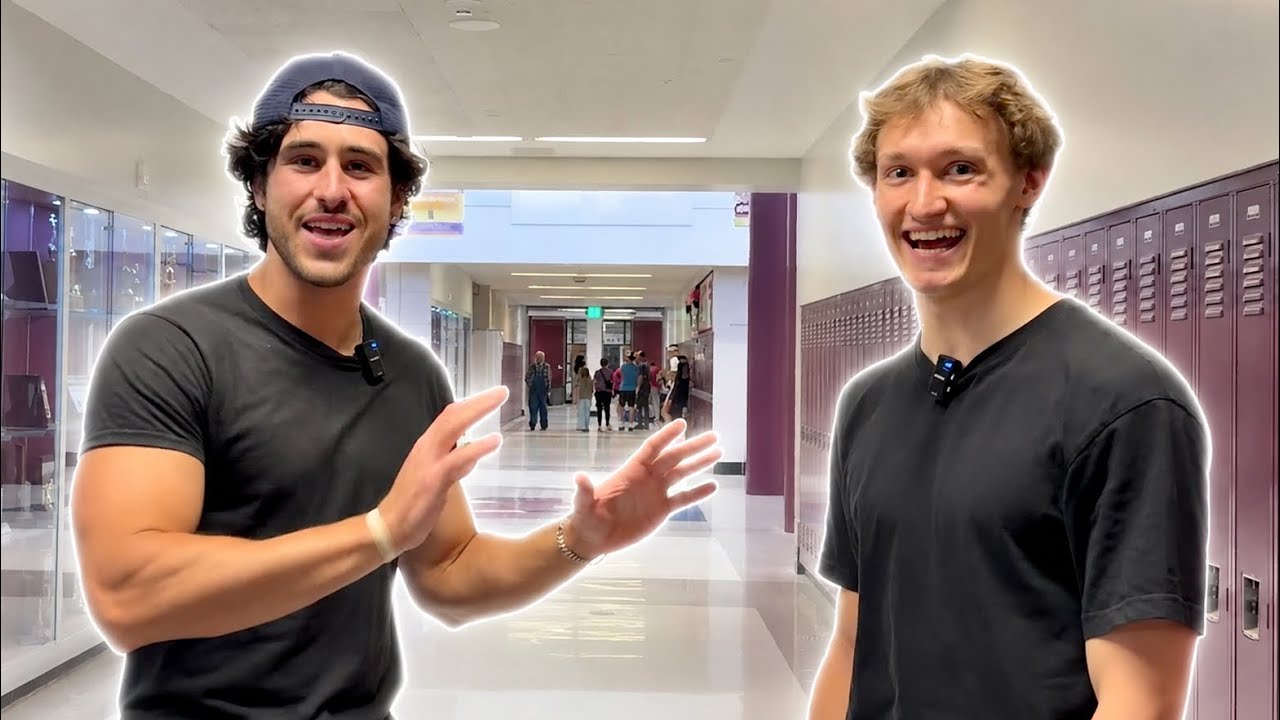
    Ethan Pimstone holds a world record max vertical jump at 52.5 inches. Nobody alive jumps higher. Piotr Zawiślak is 18, from Poland, and holds the top rank in freestyle dunking on the strength of what he does with the ball in the air rather than how far off the floor he gets. At The Dunk Camp in Salt Lake City they interviewed each other.

    “this man was hitting dunks that I can’t even fathom hitting. And your age, that’s impressive.”

    Ethan Pimstone

    Read that again as a piece of media rather than a compliment. The best in the world at one thing publicly concedes he cannot do another thing. There is no version of that sentence a training partner with identical strengths could have delivered, because a training partner with identical strengths has no gap to concede.

    Contrast Creates the Only Good Question

    What follows in the video is a real interview, and it happens because Ethan wanted something. He asked how those dunks are possible, whether it is hand speed training or raw reps, what the training looks like, whether it uses a rim or a wall, how often, and whether a weighted ball is involved.

    Six specific questions in about ninety seconds, all of them driven by an actual deficit. That is the mechanic. An athlete who already has the skill has no reason to ask about it, so the conversation stalls at praise and the footage ends up worth nothing to anybody watching.

    “Daily… when I’m before a important contest or event I’m bringing my ball to the gym. And I’m spending like one hour just doing it.”

    Piotr Zawiślak

    That is the sentence people will still be quoting from this video in two years. It exists because someone with a genuine gap kept asking follow-ups instead of moving on.

    Every Sport Has This Pairing Sitting Unused

    The sprinter who runs a 10.2 and the one who has the best start in the conference. The powerlifter with a huge squat and the one with a technically perfect bench. A distance runner with a devastating kick sitting next to one who never fades. The wrestler whose top game is unbeatable and the one nobody can hold down. A pitcher and the hitter who reads pitchers better than anyone on the roster. A climber built on finger strength and one built on footwork and body position.

    In every one of those pairs, each athlete is legitimately elite and legitimately missing what the other one has. Neither has to play the sidekick. Both have a question they have wanted answered for years and have never had a reason to ask out loud.

    Write down the thing you are worst at. Then write down the name of the athlete in your sport who is best at exactly that. If the name that comes to mind is somebody who trains identically to you, you are choosing comfort over contrast, and the footage will show it.

    Praise From Your Own Lane Reads as a Favour

    Two athletes in the same event complimenting each other looks like an arrangement, because it usually is one. Everybody watching understands the trade.

    An assessment from someone whose strength is unrelated to yours reads differently. They are not competing for the same spot, the same sponsor, or the same headline, so there is nothing in it for them beyond saying what they saw. Piotr’s answer about Ethan is the sharpest example, because he built the compliment out of a criticism.

    “His jumping ability probably because even though some people are saying that your technique isn’t perfect… you’re still jumping like 52 and a half.”

    Piotr Zawiślak

    An assessment with a flaw left in it reads as real. One with the flaws sanded off reads as a favour. Leave the flaw in.

    Two Audiences That Barely Overlap

    There is a distribution argument on top of the content argument. People who follow a jumper follow him for numbers, testing, and vertical programs. People who follow a technical specialist follow him for creativity and skill. Those two audiences are not the same people, and putting the two athletes on one piece of footage introduces each group to somebody they would never have found on their own.

    Compare that to filming with your training partner, whose followers are already your followers. The reach math on a same-lane collaboration is close to zero, which is why so many of them feel like they went nowhere.

    The Part Almost Nobody Does

    The footage is the easy half. Both of these athletes then published their own written account on their own site, and each one links to the other by name. Ethan’s account of it and Piotr’s account of it cover the same two minutes and notice different things, which is the point.

    A tag on a story expires in 24 hours and describes nothing. A permanent page that names both athletes, states what each is known for, and links to both is the version a sponsor finds eight months later, and it is the version an AI assistant reads when somebody asks who the best young athletes in a discipline are. Those systems read text on pages. They do not read the audio inside somebody else’s reel.

    So do the boring part. Transcribe the good sentences word for word. Publish within the week, on a page you control. Say who the other athlete is and why their opinion is worth something to a reader who has never heard of your sport. Link to them, and ask them to link back.

    What They Both Walked Away With

    “Let’s trade. We’ll trade some talents. And then we’ll both be top of the game.”

    Ethan Pimstone

    The world record holder left with a drill list he can start tomorrow for free. The 18-year-old left with a model for how somebody adds inches after a late start. The people watching got a routine that took years to build, explained in ninety seconds by the person who built it.

    The same camp produced a related lesson worth reading next: what happens to an athlete who runs out of rivals, covered in eventually you compete with yourself. The dunk-specific breakdown is on Dunk Talk, the branding case is on Dunker Spotlight, and the marketing reasoning is in why the training detail matters.

    This video exists because Dennis Yu and I taught a session at camp for 76 athletes on how they show up on Google and in AI tools, then offered to film anybody who wanted it. The system is documented in the repurposing system from camp.

    Find the athlete whose strength is your gap. Get it on camera. Ask the question you have been quietly wondering about since you started.
  • Eventually You Compete With Yourself

    Eventually You Compete With Yourself

    The video above is two and a half minutes about dunking. One sentence in it applies to every athlete who has ever been the best person in a gym.

    “eventually, there’ll be no more dunkers to compete with. So it’s gonna be competing with yourself.”

    Jordan Kilganon

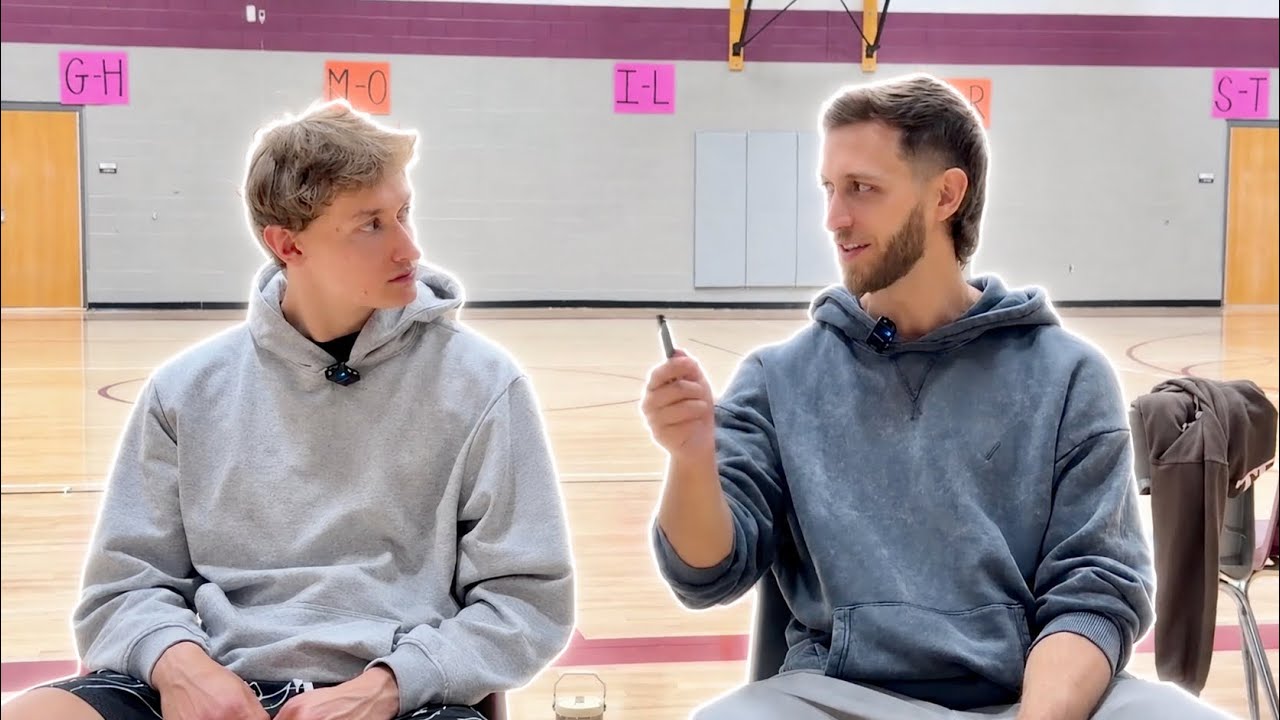
    Jordan Kilganon is the most recognized figure in freestyle dunking. He said that to Polish dunker Piotr Zawiślak, who is eighteen, at The Dunk Camp in Salt Lake City. Then he added the sentence almost nobody at his level says out loud.

    “I was always scared of that moment.”

    Jordan Kilganon

    Rivalry Is a Fuel Tank, Not a Power Source

    Almost every athlete gets to the top of their sport on borrowed motivation. There is a name on a wall, a teammate you cannot beat, a kid in the next county who keeps showing up in the same finals. You train because you cannot stand losing to that specific person. It works, and it works for years.

    The problem with the tank is that it empties in one of two ways, and both of them arrive without warning. Either you pass everybody, or the pool you were competing in stops existing around you. The county champion moves to a college program where the fuel is suddenly abundant again, then graduates into a masters division where there are eleven people in the country doing what she does and she beats all of them by April.

    The specific sports change. The mechanism does not. When the external standard disappears, athletes who never built an internal one drift, and the drift usually gets diagnosed as burnout when it is actually a motivation supply problem.

    The Entitlement Trap Arrives First

    Kilganon sequenced his advice carefully, and the running-out-of-rivals problem was not the first thing he brought up. He led with a warning about comfort, which shows up years earlier and takes out more careers.

    He described the trap in Piotr’s own future tense: travelling constantly, hitting crazy dunks, being one of the best in the world, and treating all of that as simply how life is now.

    “No. You can’t have that kind of attitude.”

    Jordan Kilganon

    “You need to appreciate every moment and keep earning it.”

    Jordan Kilganon

    Any coach who has managed a program long enough recognizes that arc. The athlete does not quit. The athlete keeps showing up, keeps travelling, keeps getting introduced by the same accomplishments, and quietly stops paying the price that produced them. Performance holds for a season on residual fitness, then it does not.

    Kilganon’s Answer Was Mechanical

    What makes this more useful than a motivational clip is that he did not stop at naming the problem. He described the exact thing he did about it, and it was an engineering decision rather than a mindset one.

    “That’s why I invented the ball handling drills, is I can only jump so much, but I wanna keep getting better. How do I do that without jumping?”

    Jordan Kilganon

    Vertical jump is a capped resource. Everyone has a personal ceiling, training gets you close to it, and past a certain age the number falls no matter what you do. Kilganon accepted the cap on that one measurement and refused to accept it as a cap on improvement, so he chose a second measurement without a known top and moved his effort there.

    That transfers directly. A sprinter whose top speed has plateaued still has starts, turnover mechanics, race-model execution, and recovery quality. A lifter at the limit of their frame still has bar path, positioning, and how many quality sessions they can absorb in a year. A goalkeeper who is not getting more explosive still has reading the play, distribution, and communication. Find the axis without a ceiling and make that the thing you are trying to win at.

    An internal standard is much easier to hold when it is attached to something measurable. Competing with yourself sounds vague until you name the metric you are competing on.

    The Mentorship Moment Nobody Records

    Everything above happened in about ninety seconds, standing on a gym floor, between two people who had just met. That is how almost all real mentorship in sport gets delivered. Not in a program, not in a session someone paid for. On a sideline, at a meet, in a parking lot, from someone ten years ahead of you who happened to be in a talking mood.

    Then it evaporates. The athlete remembers that it was meaningful and cannot reproduce a single sentence of it eighteen months later. The specific words were the whole value, and the specific words are what goes first.

    Write them down the same day, in quotes, with the name attached. Do it for yourself, because a rule you can check against is worth more than a warm feeling. Then publish it somewhere permanent with the person’s name and credentials on the page, because a sponsor, a coach, or an AI assistant answering a question about you will read text on pages and will never find audio buried in somebody else’s video.

    The Part That Proves the Whole Thing

    Kilganon solved his ceiling problem and published the solution on YouTube. Years later, in a separate interview at the same camp, record-holding jumper Ethan Pimstone asked Piotr where his hand speed came from.

    “I’ve seen some drill at Jordan Kilganon’s channel. And I started doing it a lot.”

    Piotr Zawiślak

    Daily, for years, in Poland, off a screen. Before an important contest he brings his ball to the gym and spends an hour on those drills alone. Then he flew to Utah, met the man who invented them, and tried them next to him.

    “I was trying to do some of his drills, and I just couldn’t get it, and he was doing it with ease.”

    Piotr Zawiślak

    That chain only exists as a fact because two conversations were filmed days apart and then written down. Neither video contains the story on its own. The training-detail half is in two athletes with complementary strengths.

    It also shows what a coachable athlete looks like. The influence was already operating at full strength before either of them knew the other existed. Kilganon’s assessment of him was earned partly with Kilganon’s own material.

    “There’s nobody that’s been this young that’s doing the stuff that he’s doing.”

    Jordan Kilganon

    Be Desperate While It Still Costs You Something

    The closing instruction was short.

    “Be desperate to get better all the time with all your time possible.”

    Jordan Kilganon

    Desperate is a deliberate word. It is the state of someone who has not got the thing yet. The warning underneath it is that success removes desperation as a side effect, and the athlete who does not replace it with something built on purpose has about two good seasons left after that.

    This conversation was filmed because Dennis Yu and I ran a session for 76 campers on how athletes show up on Google and in AI tools, then offered to interview anyone who wanted one. The method is documented in the repurposing system from camp. Piotr’s first-person account is meeting the reason he started, the dunk-community breakdown is about running out of people to beat, the sport-specific version is his advice to young dunkers, and the business translation is the ceiling problem.

    Somebody ten years ahead of you is going to say something like this to you at a meet this season. You will have about ninety seconds. Get the words.

  • When the Authority in Your Sport Puts You on Camera

    When the Authority in Your Sport Puts You on Camera

    The video above is four minutes of three guys talking about dunking. The thing that happens in it happens in every sport, every weekend, to athletes who then let it evaporate.

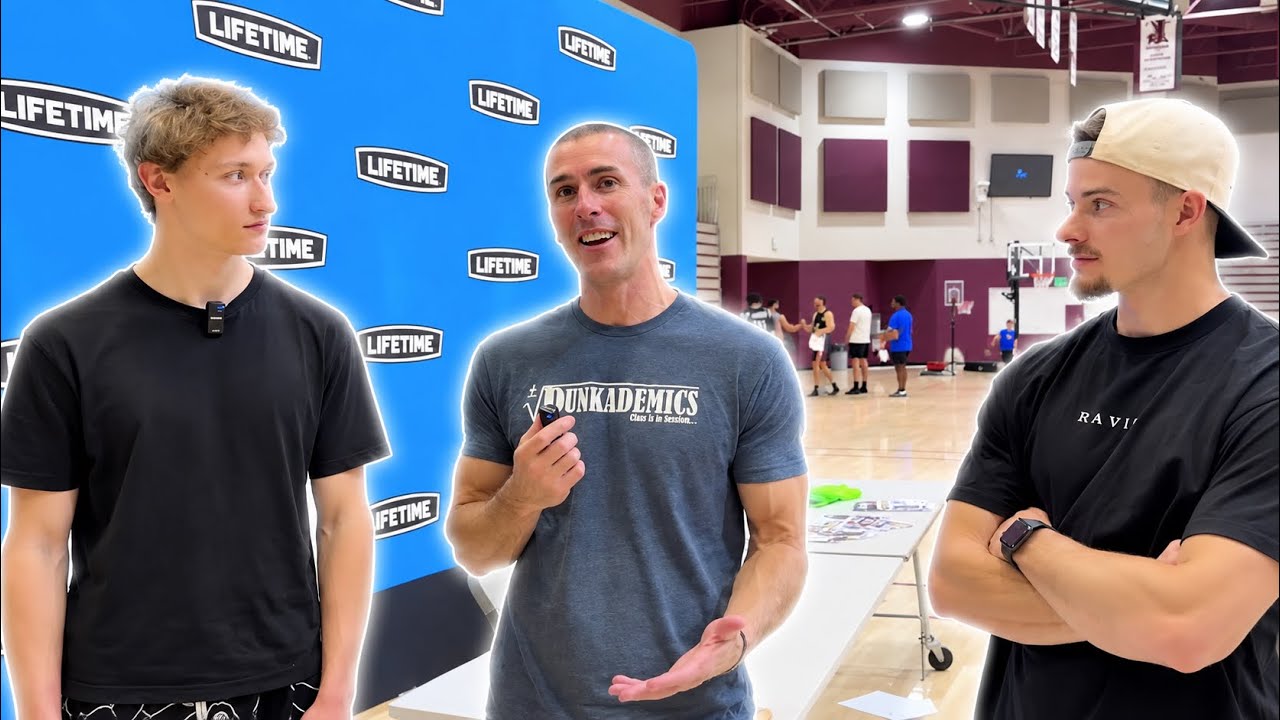
    Here is the setup. Billy Doran of Dunkademics has been filming freestyle dunkers since 2007. In that sport, his camera is the closest thing to a governing body. At The Dunk Camp in Salt Lake City, he pointed it at an eighteen-year-old from Poland named Piotr Zawiślak and gave an evaluation.

    “He’s crazy. He’s young in the game and he’s already black band. That’s, it’s insane.”

    Billy Doran, Dunkademics

    Sixty seconds of footage. In most athletes’ hands it becomes a story post that disappears in 24 hours. In this case it became a permanent, citable record, and the difference between those two outcomes is entirely a matter of what happened after the camera turned off.

    Every Sport Has Someone Whose Camera Confers Status

    Freestyle dunking has Dunkademics. Powerlifting has the meet-day film crews and the federation accounts. Track has a handful of highlight pages that decide which high schoolers the country hears about. Climbing has route setters and film crews with more reach than any sanctioning body. Wrestling has the recruiting services. BMX and skating have video parts, which have functioned as a career currency for forty years.

    These people are not neutral. They are the ones who decide what the sport looks like to everybody who is not in the room. Getting on their camera is the closest thing a non-mainstream athlete has to being drafted, and unlike being drafted, nobody sends you a certificate afterward.

    Identify who that is in your sport. There are usually two or three. If you cannot name them, you are not paying attention to how your own sport distributes attention.

    The Evaporation Problem

    The clip goes up on their account, not yours. You do not control it, you cannot edit it, and you cannot guarantee it will still be there next year. It is not searchable by your name. If a sponsor, a coach, or a meet director goes looking for evidence that you are worth backing, they will not find it, because a video on somebody else’s page does not surface for a query about you.

    The same is true of AI assistants, which increasingly sit between an athlete and the person deciding whether to fund them. A model answering “who are the best young dunkers in Europe” reads text on pages, not comment sections under a reel. If the strongest thing ever said about you exists only as audio inside somebody else’s video, it functionally does not exist.

    This is not a hypothetical loss. Most athletes have already had two or three of these moments and cannot produce a single link to any of them.

    Capture It the Same Day

    Get the actual URL, not a screenshot and not a repost. Put it somewhere you will look again, which is not your camera roll. Ask the person filming whether you can use the footage, and most of the time the answer is yes, because they filmed you to build their own library and yours is a rounding error.

    Write down what they said word for word. This is the step nearly everyone skips, and it is the one that carries all the value. “He’s already black band” tells a reader something specific about where an athlete sits in a ranked system. “Billy said good things about me” tells them nothing and reads like self-promotion.

    Then publish it on a page you own, with the person’s name, what they run, how long they have been doing it, and a link to them. That context is what turns a quote into evidence. A reader who has never heard of your sport needs to be told why this person’s opinion is worth anything.

    Keep the Criticism In

    The most useful sentence in the whole interview was not the praise. It was the answer to a direct question about what Piotr needs to become the number one dunker in the world.

    “if he gains a few inches of vert… ’cause he’s already got the hand speed, the technique stuff like that.”

    Billy Doran, Dunkademics

    One variable. Everything else already at standard. That is a training plan, and it is also the thing that makes the rest of the evaluation trustworthy, because an assessment with a flaw in it reads as real and an assessment without one reads as a favor.

    So ask for the critique on camera. Ask the person filming what is holding you back. Most athletes are too nervous to ask and end up with three minutes of compliments they cannot use. Piotr got a number he can train against, and he wrote it down himself in his account of the day he was filmed.

    The Moments With No View Count

    Hyrum Fechser was standing in that interview too. He had arrived at camp late and missed the session everyone was talking about.

    “I wasn’t at Dunk Camp until now, so this was the coolest part for me, seeing all these guys in person.”

    Hyrum Fechser

    Nobody was filming that specifically. It has no metrics attached. It only survives because someone transcribed the interview and wrote it into an article, which is a fair summary of the entire argument here: the things worth keeping are almost never the things the algorithm rewarded that day.

    Billy also named the dunkers who impressed him most across two decades of filming. His all-time pick was T-Dub, for balance and style rather than for jumping the highest, and most of the other names on his list got there the same way. That is worth noticing if you compete in a judged or filmed sport: the person who decides what your discipline looks like to outsiders may be grading something other than the number you train for. His own version is the most impressive dunkers he has filmed, and the sport-specific breakdown is the full list on Dunk Talk.

    This interview exists because Dennis Yu and I ran a session for 76 campers on how athletes get found on Google and in AI tools, then offered to film anyone who wanted it. The system is documented in the repurposing system from Dunk Camp. The dunk-specific case for treating footage as a credential is getting filmed is a credential, and the search reasoning is in coverage from the authority in your niche.

    Somebody in your sport is going to point a camera at you this season. What happens in front of it is your training. What happens after it is your career.