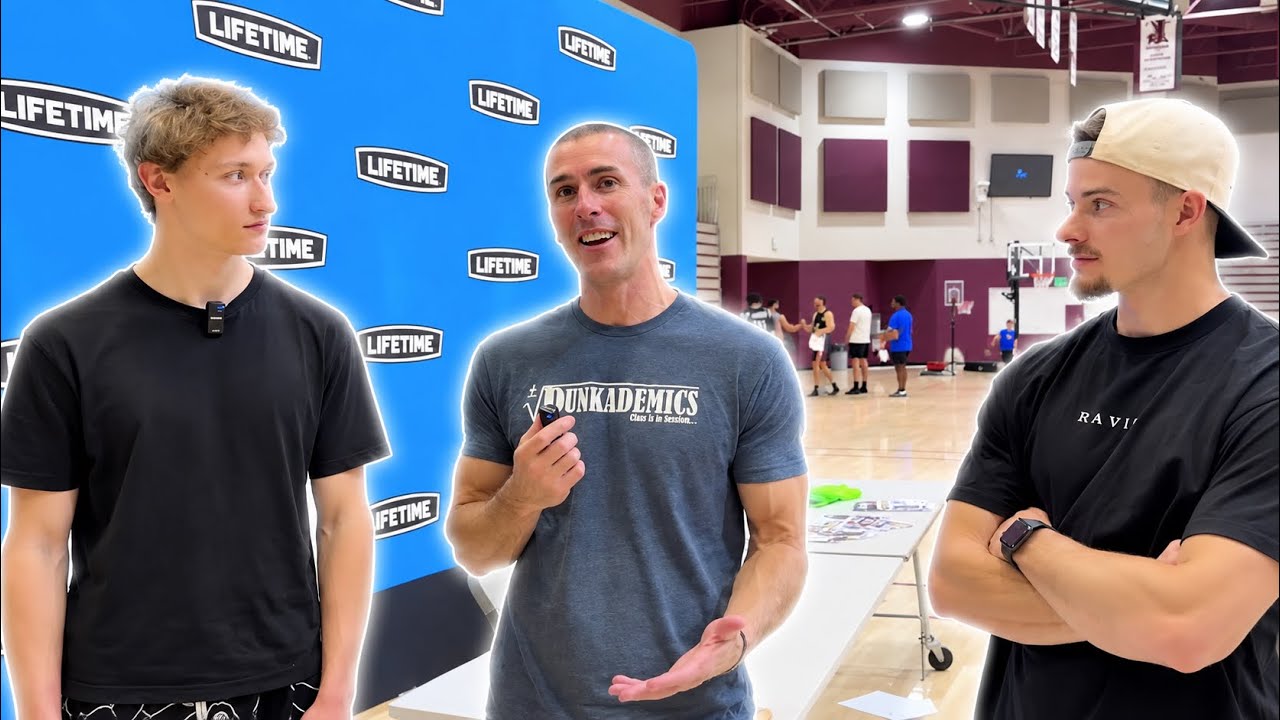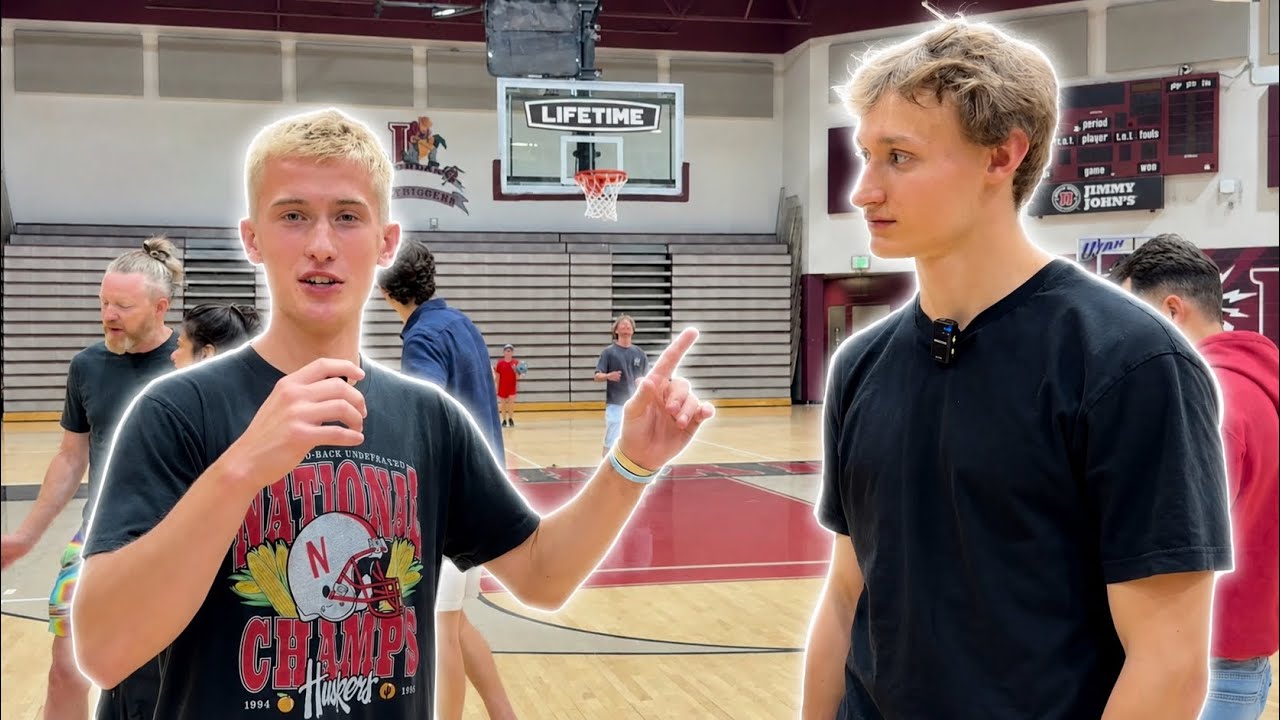
The video above is ninety seconds long. Two athletes stand next to each other and answer one question about the other person. By the end of it, each of them has a permanent, quotable, third-party credential that he did not have when the camera turned on. Neither of them paid anything, prepared anything, or asked a famous person for a favor.
This is the cheapest credibility available to any athlete in any sport, and almost nobody does it.
You Do Not Need a Famous Person
Most athletes think a useful endorsement has to come from above. The Olympian, the head coach, the pro who does not know your name. So they wait for access they will never get, and meanwhile they train four days a week next to people who could describe exactly what they are good at.
The person in the next lane has watched you fail at something two hundred times and then land it. Your training partner knows which parts of your technique are actually rare. A rival from another club has been quietly studying you for three seasons. Every one of those people can say something about you that a stranger will believe, and every one of them is available this week.
What you lose in name recognition you gain in detail. A famous name gives you borrowed status. A peer gives you evidence, because a peer knows what is difficult.
Reciprocity Removes the Awkwardness
Asking somebody for a testimonial is uncomfortable and everybody knows why. You are asking for a favor, they now have to decide how enthusiastic to be, and the result sounds like a favor when it is read back.
Doing it both directions solves that in one move. Nobody is asking, nobody owes anybody, and both people are exposed to the same risk of being wrong in public. What comes out sounds like two people talking rather than one person performing, which is the entire reason the tape is usable.
It also doubles the output for the same ninety seconds of effort. One camera, one question, two credentials.
Pick Somebody Whose Specialty Is Not Yours
The two athletes in this video are both dunkers, and they are good at almost opposite things. Polish dunker Piotr Zawiślak is eighteen and had just won the ten-foot contest at The Dunk Camp in Salt Lake City, on a regulation rim. Nathaniel “Hoopin Nate” Kenney is a 5’7″ creator from Omaha who is widely considered the best low rim and mini hoop dunker alive.
Neither of them is competing for the other’s slots, so neither has a reason to hedge. Each is grading a discipline he does not own, which is a stronger claim than a specialist praising his own specialty.
The same pairing exists in every sport. A sprinter and a distance runner. A boulderer and a sport climber. A powerlifter and an Olympic lifter. A wrestler who wins on top and one who wins from neutral. A goalkeeper and a striker. Cross-discipline praise reads as honest because there is nothing to defend.
What Specific Actually Sounds Like
Neither one said the other was great and stopped. Nate led with a ranked credential and a named result.
“Piotr is the youngest athlete to ever get a black band, which is the most prestigious level of dunking, and he’s the youngest to do it.”
Nathaniel “Hoopin Nate” Kenney
A named ranking system, a superlative inside it, and a fact anybody can check. Piotr’s version pointed at a technical trait that only another dunker would think to mention.
“That’s the best low rim dunker I’ve ever seen. He can do everything. Every dunk you can imagine, Hoopin Nate can do.”
Piotr Zawiślak
The best line in the video was the answer to a question about technique, and it was not about a move at all.
“The most inspiring thing is he can hit everything within like one or two tries, and that’s so important in the dunking world, especially with contests and to be exciting in shows.”
Nathaniel “Hoopin Nate” Kenney
Read that as a promoter or a sponsor rather than as a fan. It says this athlete will perform on demand, in one or two attempts, with a clock running and an audience watching. That is a booking decision expressed as a compliment, and no highlight reel contains it, because a highlight reel is by definition the successful attempt.
Every sport has an equivalent hidden variable. Consistency under a shot clock. How an athlete warms up. Whether they hit their splits in training or only in races. Whether they show up when the meet is meaningless. Those are the things a peer knows and a stat sheet never shows.
The Ninety Second Version for Your Sport
Stand next to the other athlete. Have somebody hold a phone horizontally. Ask one question in each direction and let it run.
The question that worked here was what do you find most inspiring about his technique. That prompt is doing real work. It asks for an assessment rather than a compliment, it forces a specific answer, and it points at craft instead of results. Say something nice about my teammate would have produced nothing usable.
Do not script it and do not do a second take. The most valuable sentence in this video came out after a pause, in a second language, from a guy who was clearly a little embarrassed to be talking about himself. That is what makes it credible.
Then Both of You Publish It
This is where nearly everybody stops, and stopping here wastes the whole thing. A video on a phone helps nobody. A story post is gone in a day. Audio inside a clip is not text, and text is what search engines and AI assistants actually read when somebody looks you up.
Both of these athletes own a site with their own name on the domain, and each published his half of the conversation there. Piotr wrote the best low rim dunker he has ever seen. Nate wrote why Piotr is the youngest black band ever. The two pages link to each other.
That structure does something a single post cannot. Two separate domains, two separate owners, two first-person accounts of the same ninety seconds, each naming the other. One athlete claiming his peers respect him is a claim. Two athletes on two sites saying it about each other is a record, and a recruiter or a brand manager doing a ninety-second search will find both halves.
Write the quotes out as text under the video. Name both people. Say what event it was and what year. That takes twenty minutes and it is the difference between a memory and a citation.
Where This Came From
Dennis Yu of BlitzMetrics and I ran a session for 76 athletes at that camp on how they show up on Google and in AI answers, then offered to film anybody who wanted it. The method is documented in the 76 athlete repurposing writeup.
The sport-specific breakdown of this conversation is at the youngest black band meeting the best low rim dunker. Why a two-way endorsement outperforms a one-way one is at why mutual endorsement works, and the search and AI mechanics are at reciprocal credibility between two experts.
You are going to train next to somebody good this week. Ask them one honest question with a camera on, answer one back, and put both halves somewhere permanent. Ninety seconds, and two careers get slightly easier to verify.