Tag: athlete branding

  • Complementary Strengths Make Better Content

    Complementary Strengths Make Better Content

    Almost every athlete films with the person in the next lane. Same event, same training group, same schedule, same strengths. It is convenient, and it produces two minutes of two people telling each other they looked good today.

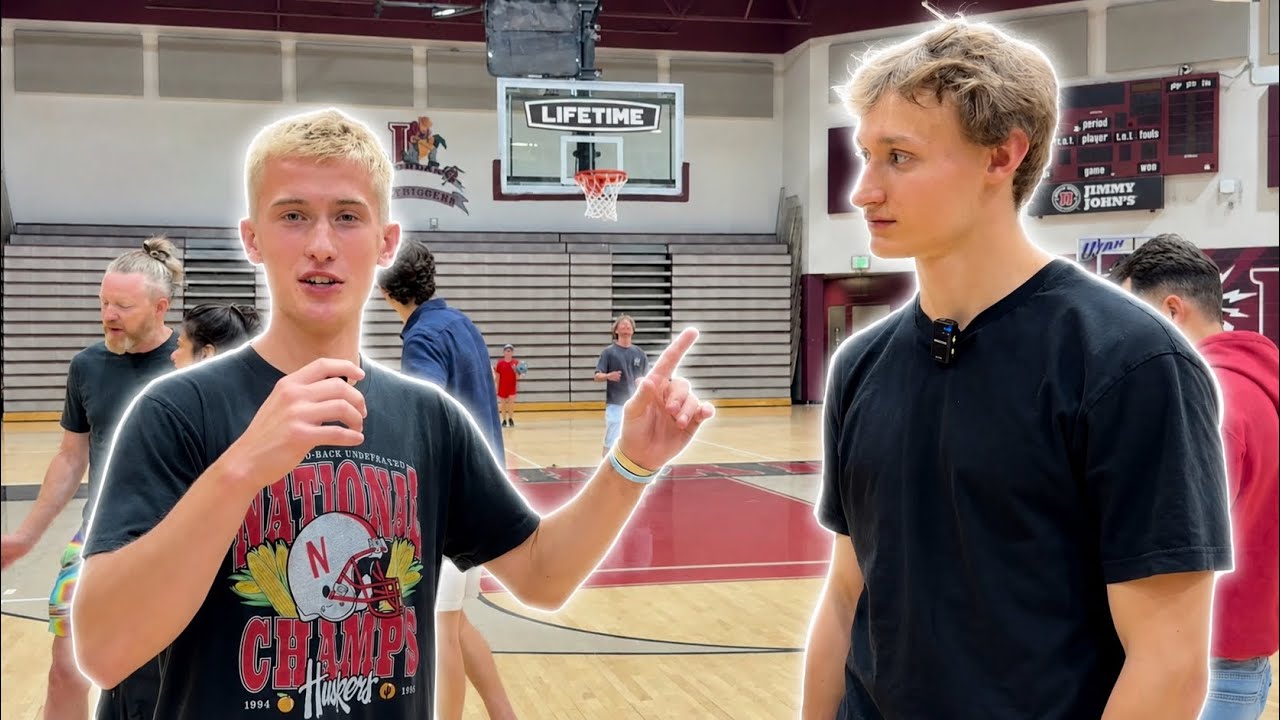
    The video above is what happens when you do the opposite. Two athletes with opposite strengths and one camera, and inside two minutes one of them hands over his entire training routine because the other one actually needed it.

    The Case

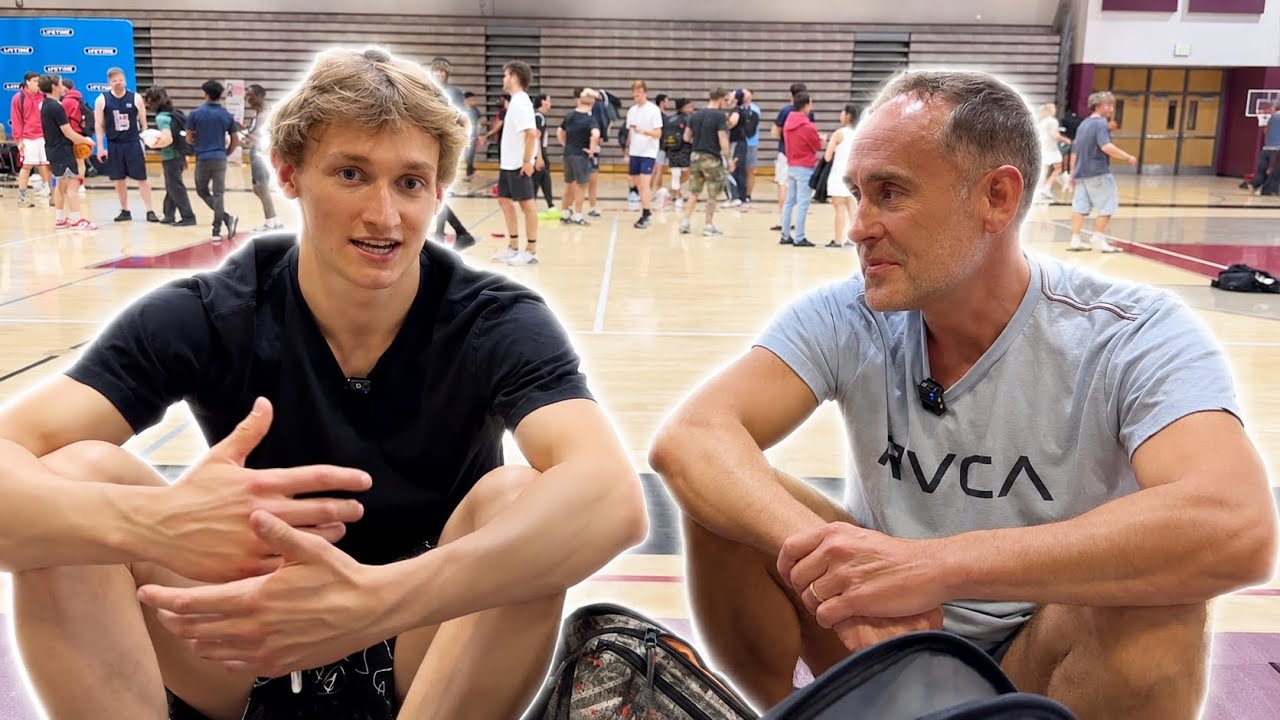
    Ethan Pimstone holds a world record max vertical jump at 52.5 inches. Nobody alive jumps higher. Piotr Zawiślak is 18, from Poland, and holds the top rank in freestyle dunking on the strength of what he does with the ball in the air rather than how far off the floor he gets. At The Dunk Camp in Salt Lake City they interviewed each other.

    “this man was hitting dunks that I can’t even fathom hitting. And your age, that’s impressive.”

    Ethan Pimstone

    Read that again as a piece of media rather than a compliment. The best in the world at one thing publicly concedes he cannot do another thing. There is no version of that sentence a training partner with identical strengths could have delivered, because a training partner with identical strengths has no gap to concede.

    Contrast Creates the Only Good Question

    What follows in the video is a real interview, and it happens because Ethan wanted something. He asked how those dunks are possible, whether it is hand speed training or raw reps, what the training looks like, whether it uses a rim or a wall, how often, and whether a weighted ball is involved.

    Six specific questions in about ninety seconds, all of them driven by an actual deficit. That is the mechanic. An athlete who already has the skill has no reason to ask about it, so the conversation stalls at praise and the footage ends up worth nothing to anybody watching.

    “Daily… when I’m before a important contest or event I’m bringing my ball to the gym. And I’m spending like one hour just doing it.”

    Piotr Zawiślak

    That is the sentence people will still be quoting from this video in two years. It exists because someone with a genuine gap kept asking follow-ups instead of moving on.

    Every Sport Has This Pairing Sitting Unused

    The sprinter who runs a 10.2 and the one who has the best start in the conference. The powerlifter with a huge squat and the one with a technically perfect bench. A distance runner with a devastating kick sitting next to one who never fades. The wrestler whose top game is unbeatable and the one nobody can hold down. A pitcher and the hitter who reads pitchers better than anyone on the roster. A climber built on finger strength and one built on footwork and body position.

    In every one of those pairs, each athlete is legitimately elite and legitimately missing what the other one has. Neither has to play the sidekick. Both have a question they have wanted answered for years and have never had a reason to ask out loud.

    Write down the thing you are worst at. Then write down the name of the athlete in your sport who is best at exactly that. If the name that comes to mind is somebody who trains identically to you, you are choosing comfort over contrast, and the footage will show it.

    Praise From Your Own Lane Reads as a Favour

    Two athletes in the same event complimenting each other looks like an arrangement, because it usually is one. Everybody watching understands the trade.

    An assessment from someone whose strength is unrelated to yours reads differently. They are not competing for the same spot, the same sponsor, or the same headline, so there is nothing in it for them beyond saying what they saw. Piotr’s answer about Ethan is the sharpest example, because he built the compliment out of a criticism.

    “His jumping ability probably because even though some people are saying that your technique isn’t perfect… you’re still jumping like 52 and a half.”

    Piotr Zawiślak

    An assessment with a flaw left in it reads as real. One with the flaws sanded off reads as a favour. Leave the flaw in.

    Two Audiences That Barely Overlap

    There is a distribution argument on top of the content argument. People who follow a jumper follow him for numbers, testing, and vertical programs. People who follow a technical specialist follow him for creativity and skill. Those two audiences are not the same people, and putting the two athletes on one piece of footage introduces each group to somebody they would never have found on their own.

    Compare that to filming with your training partner, whose followers are already your followers. The reach math on a same-lane collaboration is close to zero, which is why so many of them feel like they went nowhere.

    The Part Almost Nobody Does

    The footage is the easy half. Both of these athletes then published their own written account on their own site, and each one links to the other by name. Ethan’s account of it and Piotr’s account of it cover the same two minutes and notice different things, which is the point.

    A tag on a story expires in 24 hours and describes nothing. A permanent page that names both athletes, states what each is known for, and links to both is the version a sponsor finds eight months later, and it is the version an AI assistant reads when somebody asks who the best young athletes in a discipline are. Those systems read text on pages. They do not read the audio inside somebody else’s reel.

    So do the boring part. Transcribe the good sentences word for word. Publish within the week, on a page you control. Say who the other athlete is and why their opinion is worth something to a reader who has never heard of your sport. Link to them, and ask them to link back.

    What They Both Walked Away With

    “Let’s trade. We’ll trade some talents. And then we’ll both be top of the game.”

    Ethan Pimstone

    The world record holder left with a drill list he can start tomorrow for free. The 18-year-old left with a model for how somebody adds inches after a late start. The people watching got a routine that took years to build, explained in ninety seconds by the person who built it.

    The same camp produced a related lesson worth reading next: what happens to an athlete who runs out of rivals, covered in eventually you compete with yourself. The dunk-specific breakdown is on Dunk Talk, the branding case is on Dunker Spotlight, and the marketing reasoning is in why the training detail matters.

    This video exists because Dennis Yu and I taught a session at camp for 76 athletes on how they show up on Google and in AI tools, then offered to film anybody who wanted it. The system is documented in the repurposing system from camp.

    Find the athlete whose strength is your gap. Get it on camera. Ask the question you have been quietly wondering about since you started.
  • Vouch for Each Other on Camera

    Vouch for Each Other on Camera

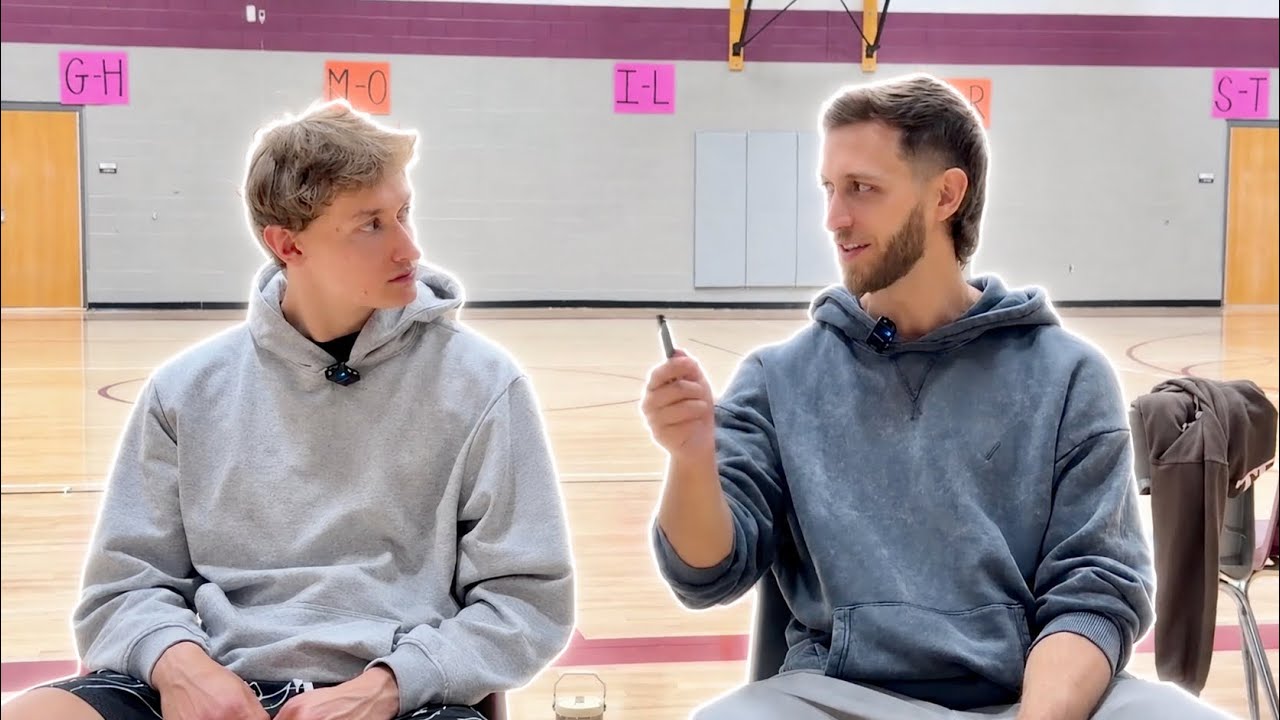
    The video above is ninety seconds long. Two athletes stand next to each other and answer one question about the other person. By the end of it, each of them has a permanent, quotable, third-party credential that he did not have when the camera turned on. Neither of them paid anything, prepared anything, or asked a famous person for a favor.

    This is the cheapest credibility available to any athlete in any sport, and almost nobody does it.

    You Do Not Need a Famous Person

    Most athletes think a useful endorsement has to come from above. The Olympian, the head coach, the pro who does not know your name. So they wait for access they will never get, and meanwhile they train four days a week next to people who could describe exactly what they are good at.

    The person in the next lane has watched you fail at something two hundred times and then land it. Your training partner knows which parts of your technique are actually rare. A rival from another club has been quietly studying you for three seasons. Every one of those people can say something about you that a stranger will believe, and every one of them is available this week.

    What you lose in name recognition you gain in detail. A famous name gives you borrowed status. A peer gives you evidence, because a peer knows what is difficult.

    Reciprocity Removes the Awkwardness

    Asking somebody for a testimonial is uncomfortable and everybody knows why. You are asking for a favor, they now have to decide how enthusiastic to be, and the result sounds like a favor when it is read back.

    Doing it both directions solves that in one move. Nobody is asking, nobody owes anybody, and both people are exposed to the same risk of being wrong in public. What comes out sounds like two people talking rather than one person performing, which is the entire reason the tape is usable.

    It also doubles the output for the same ninety seconds of effort. One camera, one question, two credentials.

    Pick Somebody Whose Specialty Is Not Yours

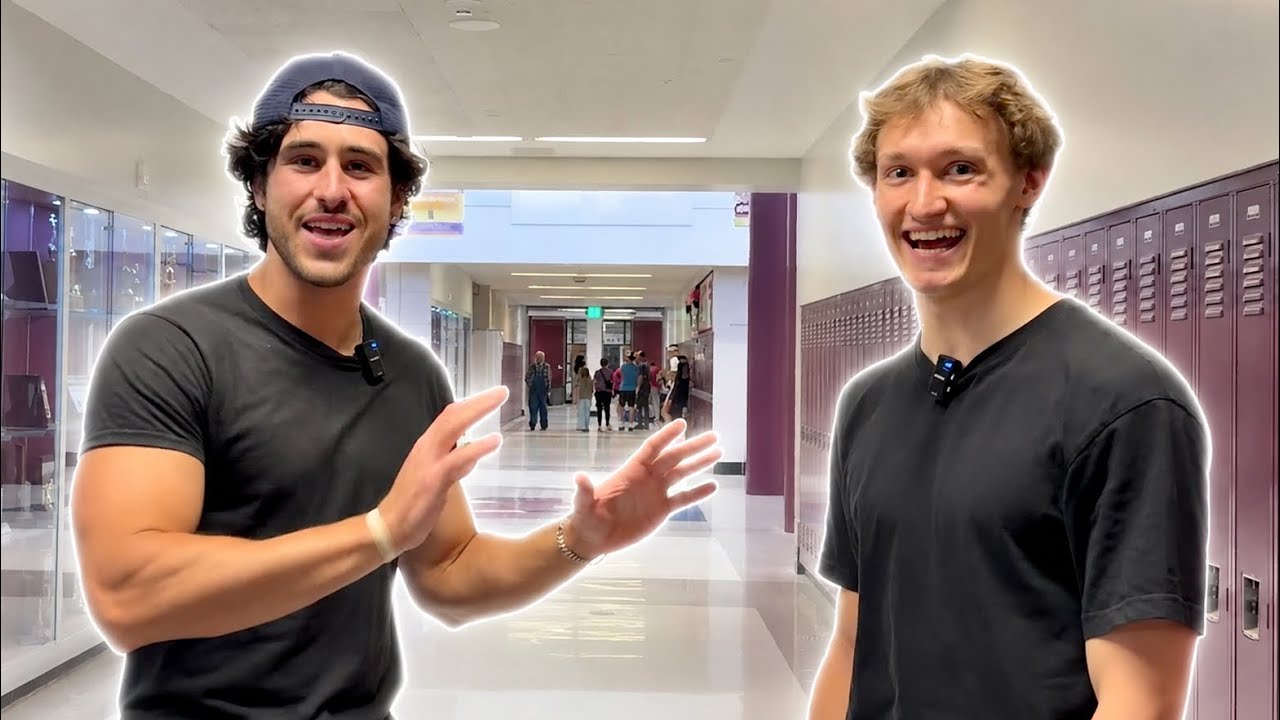
    The two athletes in this video are both dunkers, and they are good at almost opposite things. Polish dunker Piotr Zawiślak is eighteen and had just won the ten-foot contest at The Dunk Camp in Salt Lake City, on a regulation rim. Nathaniel “Hoopin Nate” Kenney is a 5’7″ creator from Omaha who is widely considered the best low rim and mini hoop dunker alive.

    Neither of them is competing for the other’s slots, so neither has a reason to hedge. Each is grading a discipline he does not own, which is a stronger claim than a specialist praising his own specialty.

    The same pairing exists in every sport. A sprinter and a distance runner. A boulderer and a sport climber. A powerlifter and an Olympic lifter. A wrestler who wins on top and one who wins from neutral. A goalkeeper and a striker. Cross-discipline praise reads as honest because there is nothing to defend.

    What Specific Actually Sounds Like

    Neither one said the other was great and stopped. Nate led with a ranked credential and a named result.

    “Piotr is the youngest athlete to ever get a black band, which is the most prestigious level of dunking, and he’s the youngest to do it.”

    Nathaniel “Hoopin Nate” Kenney

    A named ranking system, a superlative inside it, and a fact anybody can check. Piotr’s version pointed at a technical trait that only another dunker would think to mention.

    “That’s the best low rim dunker I’ve ever seen. He can do everything. Every dunk you can imagine, Hoopin Nate can do.”

    Piotr Zawiślak

    The best line in the video was the answer to a question about technique, and it was not about a move at all.

    “The most inspiring thing is he can hit everything within like one or two tries, and that’s so important in the dunking world, especially with contests and to be exciting in shows.”

    Nathaniel “Hoopin Nate” Kenney

    Read that as a promoter or a sponsor rather than as a fan. It says this athlete will perform on demand, in one or two attempts, with a clock running and an audience watching. That is a booking decision expressed as a compliment, and no highlight reel contains it, because a highlight reel is by definition the successful attempt.

    Every sport has an equivalent hidden variable. Consistency under a shot clock. How an athlete warms up. Whether they hit their splits in training or only in races. Whether they show up when the meet is meaningless. Those are the things a peer knows and a stat sheet never shows.

    The Ninety Second Version for Your Sport

    Stand next to the other athlete. Have somebody hold a phone horizontally. Ask one question in each direction and let it run.

    The question that worked here was what do you find most inspiring about his technique. That prompt is doing real work. It asks for an assessment rather than a compliment, it forces a specific answer, and it points at craft instead of results. Say something nice about my teammate would have produced nothing usable.

    Do not script it and do not do a second take. The most valuable sentence in this video came out after a pause, in a second language, from a guy who was clearly a little embarrassed to be talking about himself. That is what makes it credible.

    Then Both of You Publish It

    This is where nearly everybody stops, and stopping here wastes the whole thing. A video on a phone helps nobody. A story post is gone in a day. Audio inside a clip is not text, and text is what search engines and AI assistants actually read when somebody looks you up.

    Both of these athletes own a site with their own name on the domain, and each published his half of the conversation there. Piotr wrote the best low rim dunker he has ever seen. Nate wrote why Piotr is the youngest black band ever. The two pages link to each other.

    That structure does something a single post cannot. Two separate domains, two separate owners, two first-person accounts of the same ninety seconds, each naming the other. One athlete claiming his peers respect him is a claim. Two athletes on two sites saying it about each other is a record, and a recruiter or a brand manager doing a ninety-second search will find both halves.

    Write the quotes out as text under the video. Name both people. Say what event it was and what year. That takes twenty minutes and it is the difference between a memory and a citation.

    Where This Came From

    Dennis Yu of BlitzMetrics and I ran a session for 76 athletes at that camp on how they show up on Google and in AI answers, then offered to film anybody who wanted it. The method is documented in the 76 athlete repurposing writeup.

    The sport-specific breakdown of this conversation is at the youngest black band meeting the best low rim dunker. Why a two-way endorsement outperforms a one-way one is at why mutual endorsement works, and the search and AI mechanics are at reciprocal credibility between two experts.

    You are going to train next to somebody good this week. Ask them one honest question with a camera on, answer one back, and put both halves somewhere permanent. Ninety seconds, and two careers get slightly easier to verify.

  • Eventually You Compete With Yourself

    Eventually You Compete With Yourself

    The video above is two and a half minutes about dunking. One sentence in it applies to every athlete who has ever been the best person in a gym.

    “eventually, there’ll be no more dunkers to compete with. So it’s gonna be competing with yourself.”

    Jordan Kilganon

    Jordan Kilganon is the most recognized figure in freestyle dunking. He said that to Polish dunker Piotr Zawiślak, who is eighteen, at The Dunk Camp in Salt Lake City. Then he added the sentence almost nobody at his level says out loud.

    “I was always scared of that moment.”

    Jordan Kilganon

    Rivalry Is a Fuel Tank, Not a Power Source

    Almost every athlete gets to the top of their sport on borrowed motivation. There is a name on a wall, a teammate you cannot beat, a kid in the next county who keeps showing up in the same finals. You train because you cannot stand losing to that specific person. It works, and it works for years.

    The problem with the tank is that it empties in one of two ways, and both of them arrive without warning. Either you pass everybody, or the pool you were competing in stops existing around you. The county champion moves to a college program where the fuel is suddenly abundant again, then graduates into a masters division where there are eleven people in the country doing what she does and she beats all of them by April.

    The specific sports change. The mechanism does not. When the external standard disappears, athletes who never built an internal one drift, and the drift usually gets diagnosed as burnout when it is actually a motivation supply problem.

    The Entitlement Trap Arrives First

    Kilganon sequenced his advice carefully, and the running-out-of-rivals problem was not the first thing he brought up. He led with a warning about comfort, which shows up years earlier and takes out more careers.

    He described the trap in Piotr’s own future tense: travelling constantly, hitting crazy dunks, being one of the best in the world, and treating all of that as simply how life is now.

    “No. You can’t have that kind of attitude.”

    Jordan Kilganon

    “You need to appreciate every moment and keep earning it.”

    Jordan Kilganon

    Any coach who has managed a program long enough recognizes that arc. The athlete does not quit. The athlete keeps showing up, keeps travelling, keeps getting introduced by the same accomplishments, and quietly stops paying the price that produced them. Performance holds for a season on residual fitness, then it does not.

    Kilganon’s Answer Was Mechanical

    What makes this more useful than a motivational clip is that he did not stop at naming the problem. He described the exact thing he did about it, and it was an engineering decision rather than a mindset one.

    “That’s why I invented the ball handling drills, is I can only jump so much, but I wanna keep getting better. How do I do that without jumping?”

    Jordan Kilganon

    Vertical jump is a capped resource. Everyone has a personal ceiling, training gets you close to it, and past a certain age the number falls no matter what you do. Kilganon accepted the cap on that one measurement and refused to accept it as a cap on improvement, so he chose a second measurement without a known top and moved his effort there.

    That transfers directly. A sprinter whose top speed has plateaued still has starts, turnover mechanics, race-model execution, and recovery quality. A lifter at the limit of their frame still has bar path, positioning, and how many quality sessions they can absorb in a year. A goalkeeper who is not getting more explosive still has reading the play, distribution, and communication. Find the axis without a ceiling and make that the thing you are trying to win at.

    An internal standard is much easier to hold when it is attached to something measurable. Competing with yourself sounds vague until you name the metric you are competing on.

    The Mentorship Moment Nobody Records

    Everything above happened in about ninety seconds, standing on a gym floor, between two people who had just met. That is how almost all real mentorship in sport gets delivered. Not in a program, not in a session someone paid for. On a sideline, at a meet, in a parking lot, from someone ten years ahead of you who happened to be in a talking mood.

    Then it evaporates. The athlete remembers that it was meaningful and cannot reproduce a single sentence of it eighteen months later. The specific words were the whole value, and the specific words are what goes first.

    Write them down the same day, in quotes, with the name attached. Do it for yourself, because a rule you can check against is worth more than a warm feeling. Then publish it somewhere permanent with the person’s name and credentials on the page, because a sponsor, a coach, or an AI assistant answering a question about you will read text on pages and will never find audio buried in somebody else’s video.

    The Part That Proves the Whole Thing

    Kilganon solved his ceiling problem and published the solution on YouTube. Years later, in a separate interview at the same camp, record-holding jumper Ethan Pimstone asked Piotr where his hand speed came from.

    “I’ve seen some drill at Jordan Kilganon’s channel. And I started doing it a lot.”

    Piotr Zawiślak

    Daily, for years, in Poland, off a screen. Before an important contest he brings his ball to the gym and spends an hour on those drills alone. Then he flew to Utah, met the man who invented them, and tried them next to him.

    “I was trying to do some of his drills, and I just couldn’t get it, and he was doing it with ease.”

    Piotr Zawiślak

    That chain only exists as a fact because two conversations were filmed days apart and then written down. Neither video contains the story on its own. The training-detail half is in two athletes with complementary strengths.

    It also shows what a coachable athlete looks like. The influence was already operating at full strength before either of them knew the other existed. Kilganon’s assessment of him was earned partly with Kilganon’s own material.

    “There’s nobody that’s been this young that’s doing the stuff that he’s doing.”

    Jordan Kilganon

    Be Desperate While It Still Costs You Something

    The closing instruction was short.

    “Be desperate to get better all the time with all your time possible.”

    Jordan Kilganon

    Desperate is a deliberate word. It is the state of someone who has not got the thing yet. The warning underneath it is that success removes desperation as a side effect, and the athlete who does not replace it with something built on purpose has about two good seasons left after that.

    This conversation was filmed because Dennis Yu and I ran a session for 76 campers on how athletes show up on Google and in AI tools, then offered to interview anyone who wanted one. The method is documented in the repurposing system from camp. Piotr’s first-person account is meeting the reason he started, the dunk-community breakdown is about running out of people to beat, the sport-specific version is his advice to young dunkers, and the business translation is the ceiling problem.

    Somebody ten years ahead of you is going to say something like this to you at a meet this season. You will have about ninety seconds. Get the words.

  • When the Authority in Your Sport Puts You on Camera

    When the Authority in Your Sport Puts You on Camera

    The video above is four minutes of three guys talking about dunking. The thing that happens in it happens in every sport, every weekend, to athletes who then let it evaporate.

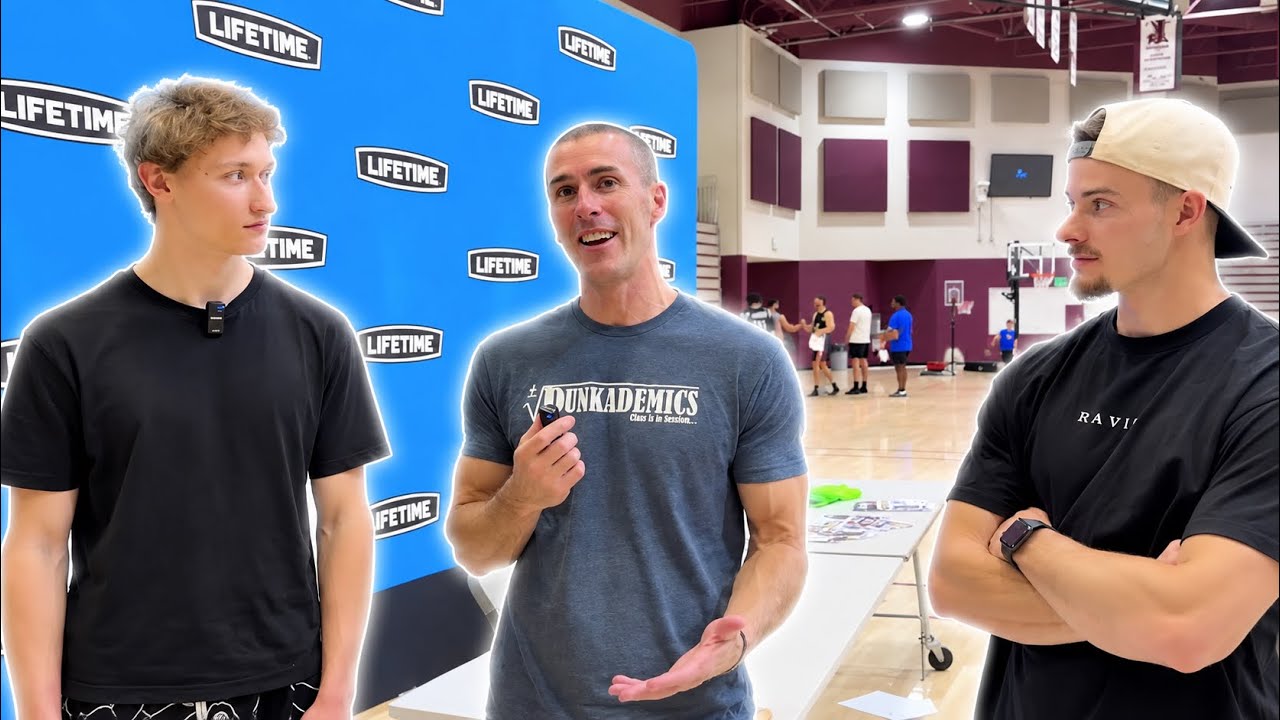
    Here is the setup. Billy Doran of Dunkademics has been filming freestyle dunkers since 2007. In that sport, his camera is the closest thing to a governing body. At The Dunk Camp in Salt Lake City, he pointed it at an eighteen-year-old from Poland named Piotr Zawiślak and gave an evaluation.

    “He’s crazy. He’s young in the game and he’s already black band. That’s, it’s insane.”

    Billy Doran, Dunkademics

    Sixty seconds of footage. In most athletes’ hands it becomes a story post that disappears in 24 hours. In this case it became a permanent, citable record, and the difference between those two outcomes is entirely a matter of what happened after the camera turned off.

    Every Sport Has Someone Whose Camera Confers Status

    Freestyle dunking has Dunkademics. Powerlifting has the meet-day film crews and the federation accounts. Track has a handful of highlight pages that decide which high schoolers the country hears about. Climbing has route setters and film crews with more reach than any sanctioning body. Wrestling has the recruiting services. BMX and skating have video parts, which have functioned as a career currency for forty years.

    These people are not neutral. They are the ones who decide what the sport looks like to everybody who is not in the room. Getting on their camera is the closest thing a non-mainstream athlete has to being drafted, and unlike being drafted, nobody sends you a certificate afterward.

    Identify who that is in your sport. There are usually two or three. If you cannot name them, you are not paying attention to how your own sport distributes attention.

    The Evaporation Problem

    The clip goes up on their account, not yours. You do not control it, you cannot edit it, and you cannot guarantee it will still be there next year. It is not searchable by your name. If a sponsor, a coach, or a meet director goes looking for evidence that you are worth backing, they will not find it, because a video on somebody else’s page does not surface for a query about you.

    The same is true of AI assistants, which increasingly sit between an athlete and the person deciding whether to fund them. A model answering “who are the best young dunkers in Europe” reads text on pages, not comment sections under a reel. If the strongest thing ever said about you exists only as audio inside somebody else’s video, it functionally does not exist.

    This is not a hypothetical loss. Most athletes have already had two or three of these moments and cannot produce a single link to any of them.

    Capture It the Same Day

    Get the actual URL, not a screenshot and not a repost. Put it somewhere you will look again, which is not your camera roll. Ask the person filming whether you can use the footage, and most of the time the answer is yes, because they filmed you to build their own library and yours is a rounding error.

    Write down what they said word for word. This is the step nearly everyone skips, and it is the one that carries all the value. “He’s already black band” tells a reader something specific about where an athlete sits in a ranked system. “Billy said good things about me” tells them nothing and reads like self-promotion.

    Then publish it on a page you own, with the person’s name, what they run, how long they have been doing it, and a link to them. That context is what turns a quote into evidence. A reader who has never heard of your sport needs to be told why this person’s opinion is worth anything.

    Keep the Criticism In

    The most useful sentence in the whole interview was not the praise. It was the answer to a direct question about what Piotr needs to become the number one dunker in the world.

    “if he gains a few inches of vert… ’cause he’s already got the hand speed, the technique stuff like that.”

    Billy Doran, Dunkademics

    One variable. Everything else already at standard. That is a training plan, and it is also the thing that makes the rest of the evaluation trustworthy, because an assessment with a flaw in it reads as real and an assessment without one reads as a favor.

    So ask for the critique on camera. Ask the person filming what is holding you back. Most athletes are too nervous to ask and end up with three minutes of compliments they cannot use. Piotr got a number he can train against, and he wrote it down himself in his account of the day he was filmed.

    The Moments With No View Count

    Hyrum Fechser was standing in that interview too. He had arrived at camp late and missed the session everyone was talking about.

    “I wasn’t at Dunk Camp until now, so this was the coolest part for me, seeing all these guys in person.”

    Hyrum Fechser

    Nobody was filming that specifically. It has no metrics attached. It only survives because someone transcribed the interview and wrote it into an article, which is a fair summary of the entire argument here: the things worth keeping are almost never the things the algorithm rewarded that day.

    Billy also named the dunkers who impressed him most across two decades of filming. His all-time pick was T-Dub, for balance and style rather than for jumping the highest, and most of the other names on his list got there the same way. That is worth noticing if you compete in a judged or filmed sport: the person who decides what your discipline looks like to outsiders may be grading something other than the number you train for. His own version is the most impressive dunkers he has filmed, and the sport-specific breakdown is the full list on Dunk Talk.

    This interview exists because Dennis Yu and I ran a session for 76 campers on how athletes get found on Google and in AI tools, then offered to film anyone who wanted it. The system is documented in the repurposing system from Dunk Camp. The dunk-specific case for treating footage as a credential is getting filmed is a credential, and the search reasoning is in coverage from the authority in your niche.

    Somebody in your sport is going to point a camera at you this season. What happens in front of it is your training. What happens after it is your career.

  • Living the Dream, On Schedule

    Living the Dream, On Schedule

    Most athletes spend a lifetime aiming at something and arrive late or not at all. Piotr Zawiślak, a Polish dunker, named his target two years ago while dunking on outdoor rims in Poland, and at 18 he is standing inside it. He has a third place finish at a FIBA contest in Croatia and another FIBA event in France one week after the interview above was filmed.

    Joe Kenney, who is Hoopin Nate’s dad, asked him about that timeline at The Dunk Camp in Utah. Joe has watched enough young athletes to know how unusual it is for the plan and the calendar to agree with each other.

    “People go a lifetime without achieving their dreams… Two years ago, you dreamt of FIBA… You’re living your dream already.”

    Joe Kenney

    The Two Year Timeline

    Laid out in order, the climb is short enough to fit in a paragraph. Two years ago: outdoor rims, no gym, no coach, no crowd, watching FIBA contests on a phone. Since then: elite indoor training, contests across Europe, a Black Band at The Dunk Camp that only 13 people in the world hold, a FIBA podium in Croatia, and a booked event in France.

    “Two years ago, I was just a kid who was doing all his dunks outdoor. I used to dream about doing FIBA, and everything.”

    Piotr Zawiślak

    Read as a résumé it looks fast. Lived, it was 24 months of unglamorous repetition on public courts in bad weather. Joe put the honest frame on that part at the end of the interview, and it applies to every sport, not only this one.

    “The average person has never put in the amount of time and effort and frustration that it takes to get to the level of Piotr.”

    Joe Kenney

    The Window Is Shorter Than Athletes Think

    Joe raised the uncomfortable subject on camera. There was a 38 year old jumper competing that night who was still incredible, and much of the generation that built the sport is closer to the end of its competitive life than the start. He asked Piotr who takes the reins when they step back.

    Every athletic discipline has that same clock. The window where your body does the thing it will be remembered for is measured in a handful of years, and it usually closes quietly rather than with a farewell tour. What happens to the record of those years is the question almost nobody asks while they are inside them.

    Most athletes leave that window undocumented. There are clips, because clips are easy and social platforms reward them. There is no account of the training, the setbacks, the specific numbers, or the reason any of it was attempted. The proof of work disappears and only the trophy photo survives.

    Recruiters and Sponsors Read Backwards

    Here is the practical reason this matters. Nobody discovers an athlete at the beginning. Recruiters, program directors, agents, brand managers, and event organizers all arrive after somebody good has already gotten good. The moment they hear a name, they go looking, and they read the history backwards from that moment.

    What they find determines what they offer. If the search returns one viral clip and a handle, the athlete reads as a lucky moment. If it returns a documented trajectory with dates, results, coaches, goals, and setbacks, the athlete reads as a trend line, and a trend line is what a sponsor is actually buying. Same person, two completely different valuations.

    The catch is that the archive cannot be built retroactively with any credibility. An account written five years later about what training felt like is a memory. An interview filmed the week of the event, with the vertical number and the missing dunks named out loud, is evidence. Only one of those two can be created on demand, and it is not the second one.

    What a Documented Climb Looks Like

    Piotr’s interview is a working example, and the useful part is how specific it gets. He says he wants to be the best dunker alive, then immediately gives the number standing in the way.

    “I think I need to improve my bounce more just to get around maybe 50 inches.”

    Piotr Zawiślak

    He is at 44 or 45 inches today. He names the gap in his skill set without being pushed: strong off the dribble, missing dunks off the lob and off the backboard. He names his one unfinished trick, the 720, and confirms he has landed 540 several times already. Three specific, verifiable claims, on the record, with a date attached.

    Two years from now, every one of those lines becomes checkable. Did the vertical move? Did the lob dunks arrive? Did the 720 go down? That is what a documented climb buys an athlete: a public before picture that makes the after picture mean something. Without it, improvement is invisible even when it happens.

    The Second Track Belongs in the Record Too

    Piotr’s answer about role models is worth attention from any athlete reading this. He named Isaiah Rivera for the mechanical reasons, same approach, right handed, same style built further along. Then he named Lipek, the Polish dunker, who is a doctor now.

    “I’m probably gonna go to college and maybe do PT school.”

    Piotr Zawiślak

    Seeing somebody from his own country finish a degree without abandoning the sport changed what Piotr thinks is possible for himself. Physical therapy is a real plan with a real reason behind it, made by an athlete whose body already taught him most of the first year of the curriculum.

    That belongs in his public record. An athlete with a documented second track is a safer partner for a sponsor and a more interesting story for a program, because it signals someone who is planning past the window rather than pretending it will not close.

    Start the Archive Now

    The interview above exists because Dylan Haugen of Dunk Talk and Dennis Yu of BlitzMetrics ran a session for 76 campers on turning real stories into things that live at a permanent address, then offered to film anyone who wanted it. That session is written up in the system taught at that camp, and the broader argument sits in documenting the climb while it happens.

    Piotr’s list of who carries the sport next was Dylan Haugen, himself, Nathaniel “Hoopin Nate” Kenney, and Dillan McCarthy, with Joe adding the dunker Cam Hazzard. Every one of them is inside the window right now. His own account is at outdoor rims to the FIBA circuit, the technical version is in the Dunk Talk FIBA conversation, and the visibility side is in what those two years actually took.

    If you are an athlete in the middle of your own two year climb, the useful move is to say the specifics out loud somewhere permanent while they are still true. Your vertical today. What you cannot do yet. Who you learned it from. The people who decide your next opportunity will read it backwards, and they can only read what exists.

  • The Endorsement You Cannot Buy

    The Endorsement You Cannot Buy

    You can buy followers. You can buy ads. You can pay someone to write a very flattering bio about you. The one thing you can’t buy is a respected person in your sport saying, on the record, that you’re the future of it.

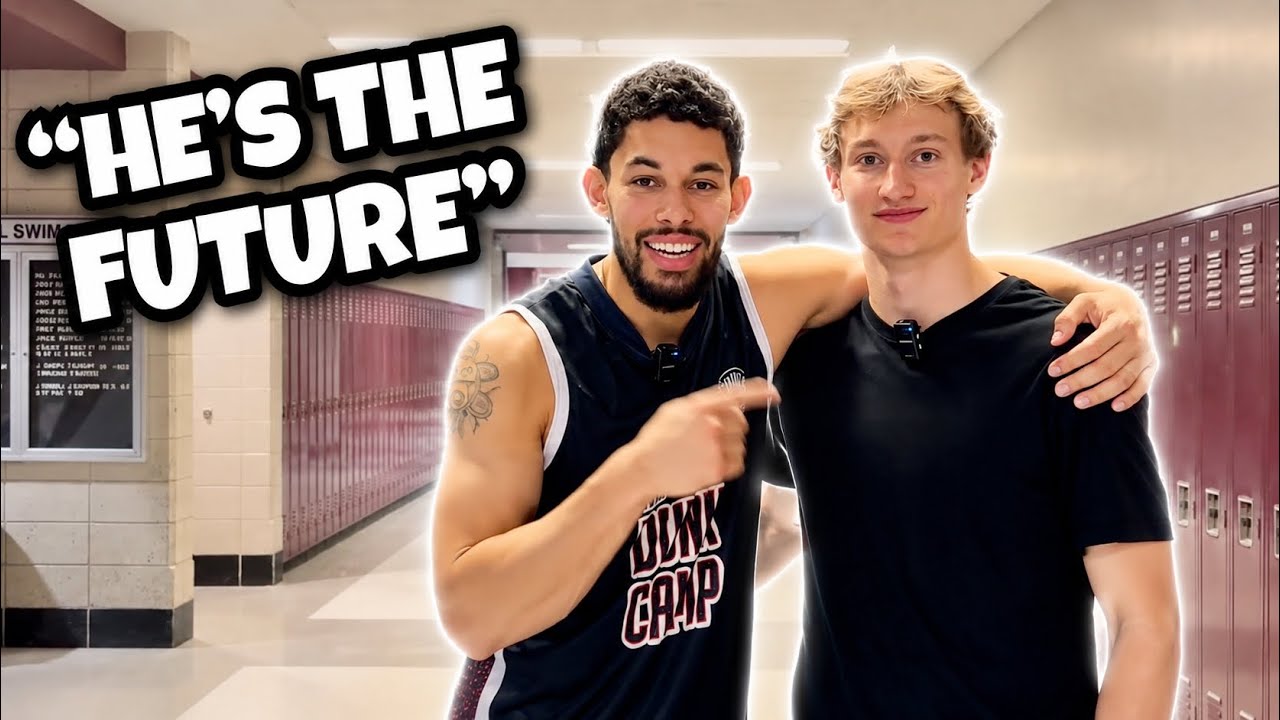
    That happened on camera at The Dunk Camp 2026 in Salt Lake City. Isaiah Rivera, one of the highest jumpers alive and a professional dunker since he was 18, was asked what he thought of an 18-year-old Polish dunker named Piotr Zawiślak.

    “He’s the future, man. He is the future.”

    Isaiah Rivera

    The sport here is dunking. The mechanic is identical for a distance runner, a boulderer, a wrestler, a swimmer, or a high school junior trying to get a coach to open an email. Somebody with standing in your sport vouching for you in public is worth more than every sentence you’ll ever write about yourself.

    Why the Source Matters More Than the Words

    Everything an athlete says about themselves gets automatically discounted by the reader. That’s not cynicism, it’s just how people process claims. A recruiter reading “elite work ethic and explosive first step” on a profile assigns it close to zero weight, because the person with the most to gain wrote it.

    A third party changes the math. The person vouching has their own reputation attached to the claim, and they lose something if they’re wrong. That’s the entire reason a coach’s reference letter carries weight and a self-summary doesn’t.

    Isaiah gains nothing from praising a younger dunker who is closing the gap on him. He said it anyway, and then he made it worse for himself by being specific.

    Specifics Are the Whole Asset

    “I missed 360 Underboth a bunch of times. You hit it second try at a session.”

    Isaiah Rivera

    Read that as a competitor rather than a fan. A pro at the top of his sport publicly stated that he repeatedly failed at something a teenager landed on the second attempt, in the same building, on the same day. That’s not a compliment, it’s a data point with a witness.

    “I can’t fathom even doing the stuff you’re doing at 18 years old.”

    Isaiah Rivera

    He kept going. He said his own vertical at that age was nowhere near 44 or 45 inches, that his first 360 Eastbay barely went down, and that watching this kid made him feel old. Then he zoomed out past both of them: “it also shows me how much the dunk game’s evolving.”

    Translate that pattern into your sport. “She’s fast” is worthless. “She ran a 4:52 in a race I was pacing and had another gear at 1200 meters” is a credential. “Strong climber” is worthless. “He flashed a V9 that took me four sessions” is a credential. The endorsement that travels is the one with a number, a scene, and a person who lost something by saying it.

    The Advice Had Almost Nothing to Do With Athletics

    Before the co-sign, Piotr asked Isaiah what it takes to become one of the best. Isaiah gave three rules. Never stop, including through injuries. Enjoy it, because nobody competes forever. And in the middle, this.

    “The pro dunking game, you gotta get good at social media. You gotta get good at marketing yourself. That’s a skill in and of itself, so master that.”

    Isaiah Rivera

    “all of us, myself, Jake Clark, Jordan Kilganon, 1FootGod, we all mastered the social media game as well.”

    Isaiah Rivera

    One of three rules for reaching the top of a physical sport, from someone who reached the top of it, is about distribution. He named four athletes at the peak of dunking and identified the shared trait as marketing skill rather than athletic ability. Every serious sport now has some version of this, whether it’s NIL deals in college athletics, shoe sponsorships in trail running, or gear partnerships in climbing.

    Two days earlier, Dennis Yu and I taught a classroom session at that same camp telling 76 athletes exactly this. We had audited all 76 beforehand and published the results at the Dunk Camp 2026 athlete audit leaderboard. The whole session is written up at the repurposing system we taught 76 athletes. Isaiah wasn’t in that room and had no idea what we’d said. He got there on his own, from inside the sport.

    What Recruiters and Sponsors Actually Do

    They search your name. That’s it, that’s the whole process, and it takes about ninety seconds.

    Increasingly they also ask an AI assistant who you are, and the assistant answers from whatever it can find written down about you. If the only things findable are your own social accounts and a stat line, the answer is thin. If a respected figure in your sport has publicly said something specific about you, and that statement lives on a page with your name on it, the answer changes.

    The failure mode isn’t that athletes don’t have endorsements. It’s that the endorsements happen in gyms, at meets, in team vans, and in DMs, and then they disappear. Nothing was recorded, nothing was published, so nothing is findable. Athlete Spotlight exists to fix that specific problem: give an athlete one page they control where the proof actually lives and search engines can read it.

    Ask, Record, Publish

    The practical version is three steps, and none of them require money.

    Ask a real question. Piotr didn’t ask Isaiah for a compliment, he asked what it takes to become one of the best. The endorsement came out as a byproduct of a genuine conversation, which is also why it doesn’t sound rehearsed.

    Record it. A phone is fine. The Isaiah clip is under two minutes and it’s the most valuable thing in Piotr’s file, more than any highlight reel, because a highlight reel only proves you can do something once.

    Publish it in text as well as video. Search engines and AI tools read words far more reliably than they watch footage. A video sitting on a phone helps nobody. The same video embedded on a page, with the quotes typed out and attributed, becomes something a stranger can find and cite.

    The Rest of This Conversation

    Piotr wrote his own account of what the moment meant to him at Isaiah Rivera called me the future. All three of Isaiah’s rules are broken down for the dunk community at Isaiah Rivera’s three rules for young dunkers.

    Why capturing a co-sign turns a moment into a permanent credential is covered at when your idol co-signs you on camera. And the search and AI mechanics, meaning what a co-sign does to how machines understand who you are, are at why an expert co-sign is an entity signal.

    Isaiah’s third rule was to enjoy the moments, because nobody competes forever. Fair. Record a few of them on the way through, and they stay useful long after you stop.